


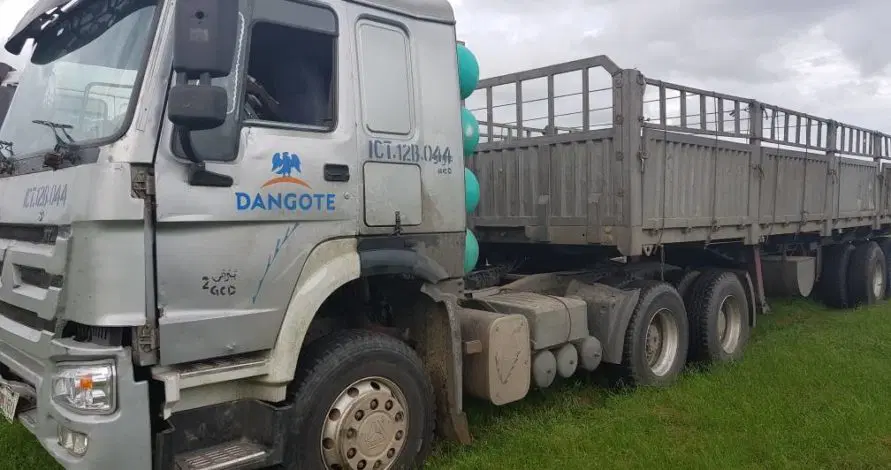
The Federal Road Safety Corps (FRSC) has commended Dangote Cement Plc for introducing a new transport safety policy aimed at improving operational standards and reducing road crashes involving heavy-duty vehicles. The transport safety policy was unveiled as part of the company’s broader commitment to safer logistics operations across Nigeria. FRSC officials described the initiative as a significant step toward strengthening road safety compliance within the transport sector. The transport safety policy is expected to enhance driver welfare, vehicle monitoring, and operational accountability. The development comes amid ongoing national efforts to reduce traffic-related fatalities and improve transport safety standards.
Road transportation remains the dominant means of moving goods across Nigeria. Heavy-duty trucks play a critical role in the movement of cement, agricultural products, petroleum products, and industrial materials.
However, concerns have continued over road crashes involving articulated vehicles, driver fatigue, poor vehicle maintenance, and non-compliance with safety regulations. The FRSC has repeatedly urged corporate organisations and fleet operators to strengthen safety systems, improve driver training, and adopt technology-driven monitoring mechanisms.
Within this context, major transport operators have increasingly come under pressure to implement stricter safety measures capable of reducing risks on Nigerian roads. The new transport safety policy introduced by Dangote Cement forms part of these wider efforts.
The FRSC praised Dangote Cement for introducing the policy during an engagement focused on transportation safety and fleet management standards. According to the Corps, the transport safety policy demonstrates corporate commitment to responsible logistics operations and compliance with established road safety regulations.
FRSC officials noted that the policy includes measures designed to improve driver discipline, strengthen vehicle monitoring systems, and ensure safer haulage operations across the company’s transport network. The Corps stated that fleet operators have a responsibility to prioritise safety because of the significant risks associated with heavy-duty transportation.
Dangote Cement explained that the policy was developed to reinforce safety culture within its logistics operations while improving compliance with transport regulations. The company also emphasized the importance of protecting drivers, road users, and transported goods through stricter operational procedures.
According to company officials, the transport safety policy includes enhanced monitoring mechanisms, improved operational oversight, and stronger enforcement of internal safety standards. The initiative aligns with broader industry efforts aimed at reducing accidents involving commercial trucks and improving accountability within the haulage sector.
FRSC representatives further encouraged other corporate organisations and transport operators to adopt similar safety-focused frameworks capable of strengthening national road safety outcomes. The Corps maintained that partnerships between regulators and private sector operators remain important in addressing transportation challenges across the country.
The transport safety policy could contribute to improved compliance among commercial fleet operators and reduce risks associated with long-distance haulage. Road safety experts have consistently identified driver fatigue, poor maintenance culture, and weak monitoring systems as major contributors to accidents involving heavy vehicles.
Improved transport management systems may therefore help reduce crash rates while enhancing operational efficiency across the logistics sector. For the broader economy, safer transportation systems can support supply chain stability, reduce losses linked to accidents, and strengthen public confidence in commercial transport operations. The policy also reflects growing attention on corporate responsibility within Nigeria’s transportation industry.