

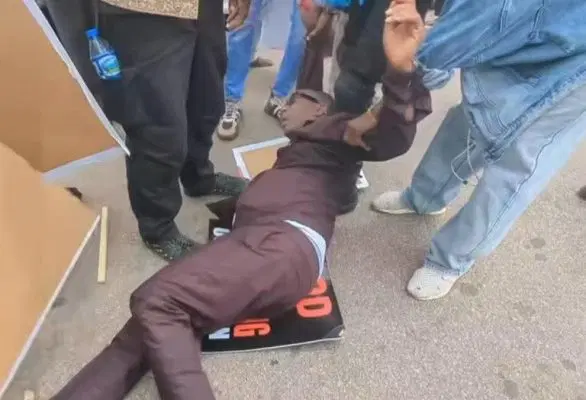
Nigeria’s 2026 Democracy Day celebrations were overshadowed by protests in Abuja and Lagos as activists, civil society groups and concerned citizens took to the streets to demand stronger action on insecurity, economic hardship and governance challenges.
The demonstrations coincided with the 33rd anniversary of the June 12, 1993 presidential election, widely regarded as a defining moment in Nigeria’s democratic history. Protest organisers said the anniversary provided an opportunity to assess the state of democracy and draw attention to issues affecting citizens across the country. In Abuja, activists gathered at several locations, including the Federal Secretariat, Unity Fountain and Wuse district. Protesters carried placards and chanted slogans calling for solutions to inflation, unemployment, kidnappings and rising living costs.
Security personnel maintained a heavy presence around strategic government facilities, including the Presidential Villa, National Assembly and Eagle Square. Roadblocks and traffic diversions were also put in place in parts of the Federal Capital Territory.
Tensions rose when security operatives fired tear gas at demonstrators near the Federal Secretariat. During the disruption, activist and former presidential candidate Omoyele Sowore reportedly collapsed after inhaling tear gas and was assisted by supporters. Addressing protesters earlier, Sowore said the demonstration was aimed at drawing attention to what organisers described as growing public frustration over insecurity and economic conditions.
Protesters repeatedly called for the rescue of citizens being held by kidnappers and urged authorities to intensify efforts against criminal groups operating across the country. Separate demonstrations were also held in Abuja by social media activist Martins Vincent Otse and supporters of the Ratel Movement, who raised similar concerns about governance and public safety.
In Lagos, human rights lawyer Femi Falana, popular musician Falz, youth groups and civil society organisations staged a peaceful protest at Ikeja.
Participants displayed placards bearing messages demanding improved security, an end to hunger and urgent government intervention to secure the release of abducted citizens. Falana expressed concern over the continued detention of kidnapped schoolchildren and teachers in parts of the country, urging authorities to intensify rescue efforts.
Falz also spoke on the growing insecurity facing many communities, noting that repeated incidents of kidnappings and violent attacks had heightened public anxiety. Human rights advocate Olumide Ogunsanwo called for stronger and more decisive measures against criminal groups, arguing that citizens expected practical solutions rather than promises.
The protests reflected growing public concern about the impact of insecurity and economic pressures on daily life. They also underscored continuing debates about governance and the extent to which democratic institutions are meeting citizens’ expectations more than three decades after the June 12 election.
Despite the security restrictions and disruptions, organisers insisted that advocacy efforts would continue until greater progress is made in tackling kidnappings, insecurity and economic hardship. As Democracy Day commemorations concluded, the demonstrations served as a reminder of the ongoing demands for accountability, safety and improved living conditions across Nigeria.