

Joint presidential ticket proposal by opposition leaders has triggered widespread reactions across Nigeria’s political space. The plan emerged after a summit involving key opposition figures in Ibadan. Joint presidential ticket arrangement is aimed at presenting a unified front against the ruling APC in 2027. The development has drawn both support and criticism from political stakeholders.
Opposition parties in Nigeria have faced challenges of fragmentation in past elections.
Multiple candidates often split votes across party lines. This has influenced electoral outcomes in recent presidential contests.
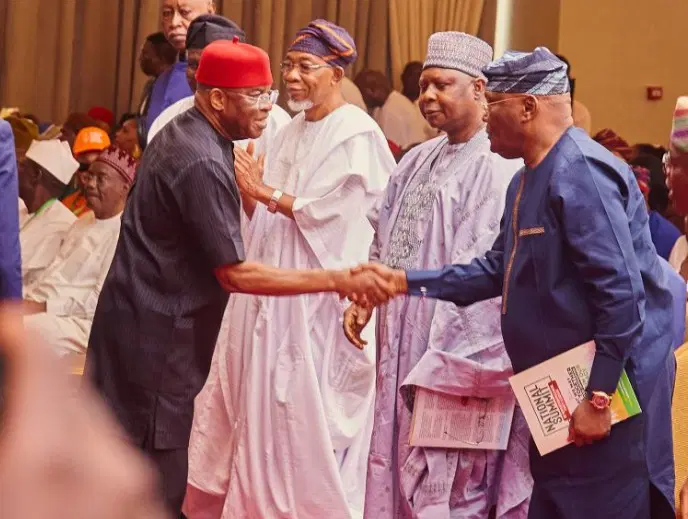
The Ibadan summit brought together leaders from different opposition blocs. Participants included members of the African Democratic Congress and factions of the Peoples Democratic Party. Prominent political figures present included Atiku Abubakar, Peter Obi, and Rotimi Amaechi. Others were Rauf Aregbesola, David Mark, and Tanimu Turaki. The meeting formed part of ongoing coalition efforts ahead of 2027.
Opposition leaders at the summit agreed to support a single candidate. The joint presidential ticket plan was positioned as a strategy for electoral coordination. The move generated mixed reactions among political actors and parties. Some stakeholders described it as a necessary step toward unity. The New Nigeria People’s Party described the initiative as “a historic realignment of purpose.” Its spokesperson said the opposition now represents a unified movement.
Afenifere supported the idea but called for clear ideological direction. The group stressed that policy vision must go beyond political ambition. Akin Osuntokun also described the proposal as a positive development. He said it could help prevent a drift toward a one-party system.
However, criticism came from several political figures. Nyesom Wike, Festus Keyamo, and Omoyele Sowore rejected the proposal. Keyamo questioned how such a merger would function operationally. He raised concerns about candidates contesting under different party structures.
Sowore declined participation in the summit. He stated that his party would not align with the initiative. The Social Democratic Party also distanced itself from the arrangement. It said it was not part of the Ibadan Declaration. Within the ADC, a faction also rejected the summit outcome. Party officials called for internal issues to be resolved first.
Joint presidential ticket strategy signals a shift in opposition coordination. It may influence alliance formation ahead of the 2027 elections. The approach could reduce vote fragmentation among opposition parties. However, internal disagreements may affect implementation. Divergent positions among parties highlight coordination challenges. These differences may shape negotiations in the coming months. The development places coalition politics at the centre of electoral planning.