




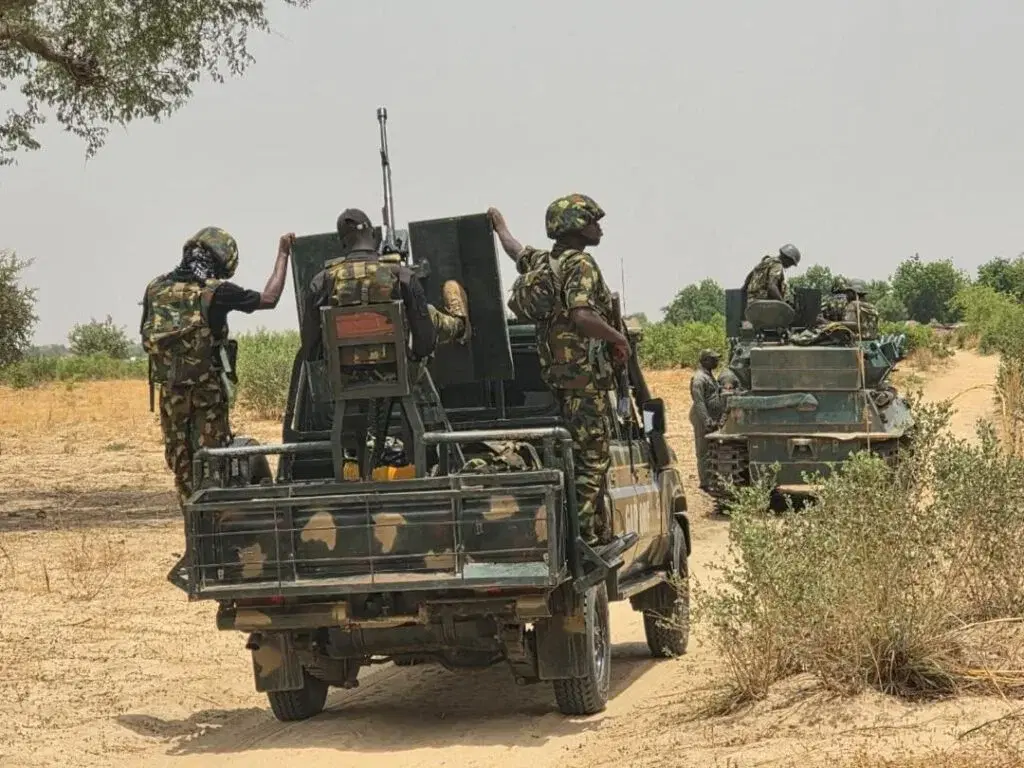
An ISWAP commander killed during ongoing military operations in Nigeria’s North-East was among at least 50 terrorists neutralised by troops of Operation Hadin Kai, according to military authorities. The operation, which targeted Islamic State West Africa Province (ISWAP) fighters and other insurgents, was carried out as part of intensified efforts to dismantle terrorist networks operating across the region. Military sources said the offensive resulted in significant casualties among insurgents and the recovery of weapons and equipment. The latest success highlights continuing efforts by security forces to degrade terrorist capabilities in the North-East.
The North-East remains the epicentre of Nigeria’s long-running insurgency involving Boko Haram and ISWAP. Security forces under Operation Hadin Kai have sustained coordinated ground and air offensives against terrorist enclaves across Borno, Yobe, and Adamawa states.
Recent military operations have focused on disrupting terrorist supply routes, destroying hideouts, and targeting key commanders believed to be coordinating attacks against military formations and civilian communities. The campaign has also involved intelligence-driven missions designed to weaken the leadership structure of insurgent groups. Military authorities have repeatedly stated that eliminating senior commanders remains critical to reducing the operational capacity of terrorist organisations in the region.
According to military reports, troops recorded a major breakthrough during operations that led to the death of a senior terrorist commander and dozens of fighters. The operation formed part of a broader counter-insurgency campaign conducted by Operation Hadin Kai across several locations in the North-East. Military sources indicated that the offensive combined ground assaults with coordinated air support, allowing troops to engage insurgents attempting to launch attacks on military positions.
The military said no fewer than 50 terrorists were neutralised during one of the major engagements. Several weapons, including machine guns, AK-47 rifles, ammunition belts, and other combat equipment, were recovered from fleeing insurgents.
Officials noted that the operation also targeted terrorist leadership elements. The ISWAP commander killed during the offensive was described as a significant figure within the insurgent structure. Security authorities believe the development could disrupt ongoing terrorist activities and weaken command coordination among fighters operating in the region. The military further stated that exploitation operations were ongoing to track fleeing terrorists and consolidate gains made during the offensive. Troops were reported to have maintained control of their positions throughout the engagements.
The elimination of senior insurgent figures and dozens of fighters represents a strategic gain in ongoing counter-terrorism operations. Security analysts have long argued that targeting command structures can reduce the ability of terrorist groups to coordinate attacks, recruit fighters, and sustain operations. The death of a senior commander may therefore affect the operational effectiveness of insurgent cells within affected areas.
The development also comes amid continued efforts by the military to reassure residents of the North-East that security operations remain active despite periodic attacks by terrorist groups. For communities affected by insurgency, sustained military pressure remains critical to improving security and supporting stabilisation efforts.