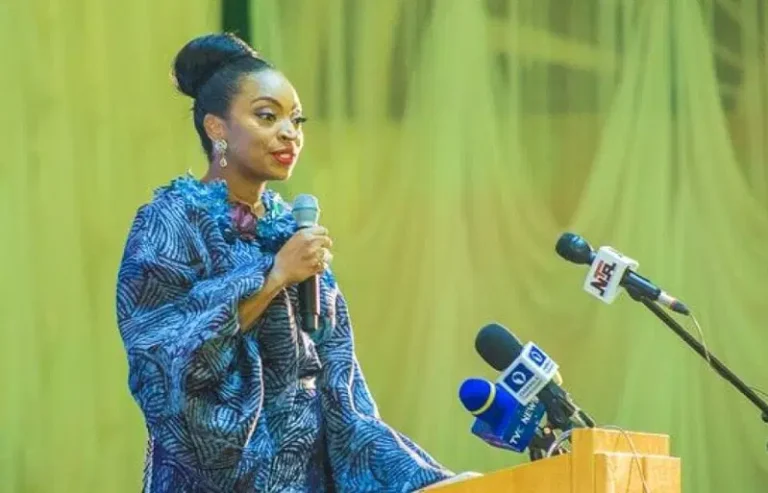




The Minister of Communications, Innovation and Digital Economy, Dr Bosun Tijani, has said that Girls Can Drive Innovation Future in Nigeria. He expressed confidence in young Nigerian girls leading solutions to national challenges. The statement was made at the National Girls in ICT 2026 Competition finale in Abuja.
The event was held on Friday in Abuja. It carried the theme “Code, Create and Inspire”. The competition was supported by KOICA, NITDA, and NIPOST. The programme brought together teams from across Nigeria. Participants came from the six geopolitical zones. They presented technology-based solutions to societal problems. The initiative aims to promote digital inclusion for girls. It also strengthens early exposure to technology skills.
Dr Tijani said government had introduced technology clubs in schools. He explained that the clubs provide continued student support. “It is a daunting task for a secondary school student to build a technology product without adult support,” he said.
He added that teachers play a critical role in mentoring students. He noted that without teachers, many innovations may not reach markets. “We recognise that without the teachers many of these products may never reach the market. That is why we have provided clubs in schools to support the students,” he said.
The minister commended all participating teams. He also congratulated the winning groups. Recognised teams included Divas from Cross River. Others were Elite from Osun and Tech Experts from FCT. Resonance from Abia and Farm Shield 360 from Kano were also listed.
KOICA Country Director, Mr Kim Eunsub, urged girls to embrace technology. He said KOICA partners with developing countries for innovation growth. “KOICA works hand in hand with developing nations, not as a distant donor but as a genuine partner committed to shared growth and development,” he said.
Earlier, NITDA Director of ICT, Folashade Olojede, encouraged girls to innovate. She described the competition as a platform for digital excellence. According to her, Nigerian girls are ready for global digital leadership.
A standout innovation came from Aisha Bala. She represented the Special Education Centre, Bauchi. Her team developed an app called “Hands That Speak”. It supports communication between deaf patients and doctors. Bala said the tool reduces preventable deaths. She explained that communication barriers delay treatment.
“Many deaf patients struggle to communicate effectively with doctors, leading to delays in diagnosis and treatment,” she said. She added that lack of communication affects hospital outcomes. “So, we came up with the idea of creating an application to bridge the communication gap between a doctor and a deaf patient,” she said.
The competition featured six schools nationwide. Each represented a geopolitical zone. Special Education Centre, Bauchi won first place. Federal Government Girls’ College, Calabar came second. Resonance Science School, Abia placed third.
The initiative highlights growing investment in digital education. It also reinforces gender inclusion in technology development. Government and partners continue to support ICT training in schools. The programme is expected to expand innovation capacity nationwide.