


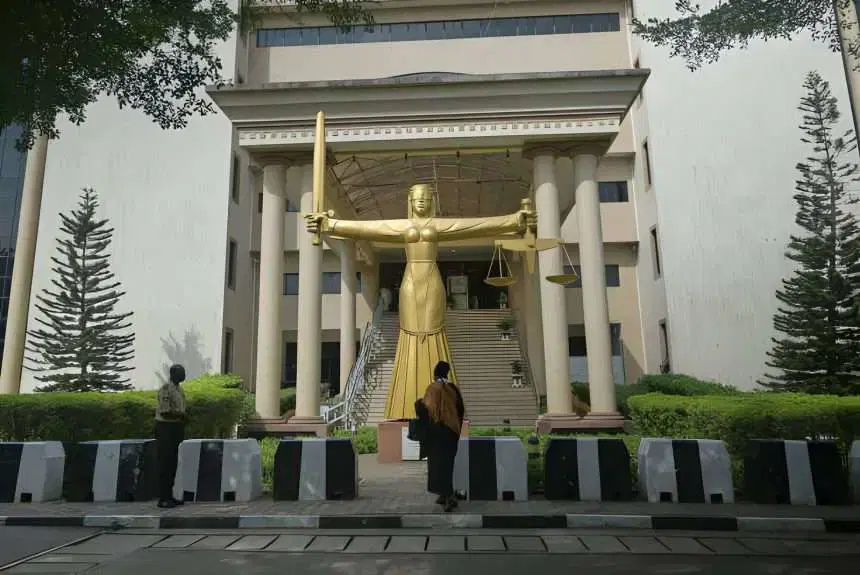
The Federal High Court has introduced significant amendments to its Pre-election rules, expanding judicial powers and embracing technology to ensure quicker and more efficient handling of election-related disputes ahead of the 2027 general elections. The revised Practice Directions, issued by the Chief Judge of the Federal High Court, Justice John Tsoho, became effective on July 14, 2026, just weeks after the original guidelines took effect on June 26.
According to a statement released by the court’s Director of Information, Dr. Catherine Christopher, the revised Practice Directions were made pursuant to Sections 254 and 285(9), (10) and (14) of the 1999 Constitution (as amended), as well as Sections 29(5) and 88(2) of the Electoral Act, 2026, alongside other relevant laws. The amendments are intended to promote the speedy, efficient and fair determination of pre-election matters while ensuring compliance with constitutional and electoral provisions.
One of the most notable changes empowers judges handling election-related cases to conduct proceedings using technology, including virtual hearings. The provision is expected to improve access to justice, reduce delays and enable the court to manage pre-election disputes more effectively within constitutionally prescribed timelines.
The revised rules also expand the authority of the Chief Judge in managing election petitions. Under the amendments, the Chief Judge may assign judges to hear pre-election matters in any judicial division of the Federal High Court and transfer cases between divisions whenever necessary. These administrative powers were not included in the earlier version of the Practice Directions.
To improve case management, the court will now notify legal practitioners of urgent proceedings and other case-related developments through email and other electronic communication channels.
Such notices must be issued at least 48 hours before the scheduled hearing. The move is expected to enhance communication between the court and litigants while supporting more efficient case administration.
The amended Practice Directions retain the existing rule limiting each party to two adjournments during proceedings. However, the court has introduced an additional restriction by providing that applications for adjournment will not be entertained on days specifically fixed for hearings. Parties who change their legal representatives during proceedings will also remain subject to the same two-adjournment limit.
The revised rules maintain the constitutional requirement that preliminary objections and jurisdictional issues be determined alongside the substantive case at final judgment.
However, judges now have express authority to impose costs on parties or legal counsel found to have filed interlocutory applications solely to delay proceedings. The amendments also require litigants alleging fraud, forgery or other disputed facts to submit written witness depositions in addition to affidavits, with such witnesses expected to undergo cross-examination where necessary.
Other procedural timelines remain unchanged under the revised Practice Directions. Respondents are still required to enter an appearance within seven days, file their defence within 10 days, while applicants have three days to file replies.
Written addresses supporting originating summons remain limited to 15 pages, while those accompanying preliminary objections must not exceed 10 pages. The Federal High Court first introduced the 2026 Pre-Election Practice Directions on June 26 as part of efforts to ensure election-related disputes are concluded within the constitutional timeframe ahead of the 2027 general elections.