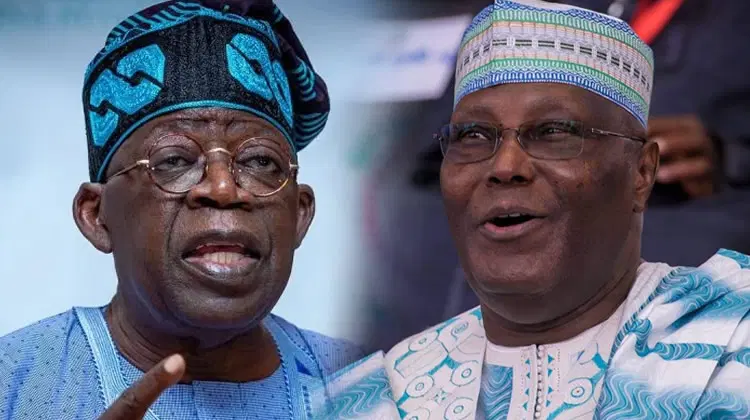
The Presidency has criticised former Vice President Atiku Abubakar over his changing position on petrol subsidy, accusing the presidential candidate of the African Democratic Congress, ADC, of political posturing.
The government also accused Atiku of lacking a clear understanding of the petroleum market and the economic implications of his proposed intervention.
The controversy followed Atiku’s declaration that he would restore a targeted petrol subsidy if elected president in 2027 to ease the economic burden on Nigerians.
However, conflicting explanations from members of his campaign team have since generated questions about the exact nature and duration of the proposed policy.
In a statement by Special Adviser to the President on Information and Strategy, Bayo Onanuga, the Presidency said Nigerians had received three different explanations within one week.
It said Atiku’s spokesman, Paul Ibe, initially explained that the subsidy would be restored temporarily before being phased out.
Another aide, Phrank Shaibu, subsequently rejected that explanation as an unauthorised characterisation of Atiku’s position.
According to the Presidency, Shaibu instead argued that the subsidy would remain until domestic refining capacity expanded, supply stabilised and market competition could deliver affordable petrol without government support.
Atiku later intervened, insisting that his position had not changed and that he would restore what he described as a “targeted subsidy”.
The Presidency questioned the contradictions.
“Nigerians deserve clarity, not policy by trial and error,” it said.
The government argued that petrol prices are influenced by several factors, including crude oil prices, exchange rates, refining expenses, transportation and distribution costs.
It said government intervention alone could not guarantee permanently cheap petrol.
The Presidency also rejected the suggestion that petrol prices were solely responsible for Nigeria’s cost-of-living crisis.
It noted that food inflation was also affected by insecurity, agricultural productivity, exchange rates, logistics, storage limitations, flooding, input costs and supply constraints.
The government therefore challenged Atiku to provide details of his proposed Atiku fuel subsidy policy.
It asked him to explain its estimated cost, beneficiaries, funding mechanism and the economic conditions that would eventually determine when the intervention would end.
The Presidency also challenged Atiku’s argument that his proposed subsidy would follow the crude oil barrel.
It pointed out that refining crude produces several petroleum products beyond petrol.
According to the statement, petrol accounts for roughly 45 percent of the products obtained from a barrel of crude, while diesel, aviation fuel, kerosene and other petroleum derivatives make up the remainder.
The government therefore asked whether Atiku intended to subsidise only petrol while refineries benefited commercially from the other products generated from the same discounted crude.
It further recalled that diesel was deregulated during the Obasanjo-Atiku administration in 2004.
The Presidency concluded that Nigeria needed a clearly costed and workable petroleum policy rather than what it described as “policy somersaults” ahead of the 2027 election.
It urged Atiku to clearly explain how his Atiku fuel subsidy proposal would operate without recreating the fiscal and governance problems associated with the former subsidy regime.