




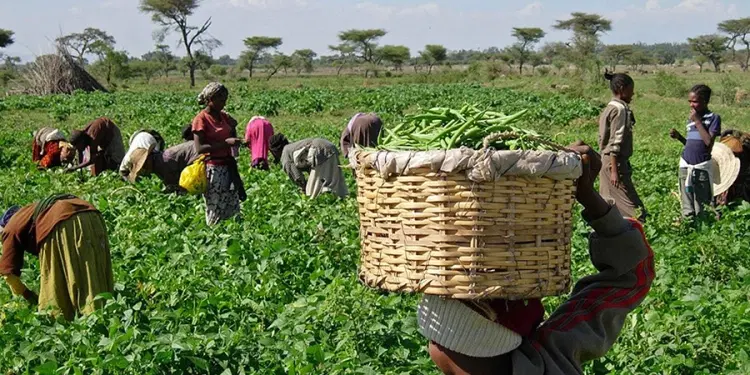
A new agricultural early warning partnership between the National Agricultural Development Fund and OSPRE has been launched to support farmers and policymakers with timely information. The initiative is designed to improve planning, reduce farming risks, and strengthen food production systems across Nigeria. Officials said the programme would provide data-driven alerts and forecasting tools for agricultural decision-making. The early warning system is also expected to improve preparedness against climate and market-related disruptions. Stakeholders described the collaboration as important for national food security and agricultural sustainability.
Nigeria’s agricultural sector continues to face challenges linked to climate change, flooding, drought, insecurity, and market instability. These factors have affected food production, farm investments, and rural livelihoods across different regions. Government agencies and agricultural stakeholders have increasingly emphasized the need for reliable data and forecasting systems to support farmers and improve productivity.
The National Agricultural Development Fund was established to support agricultural growth and strengthen financing within the sector. OSPRE is involved in risk monitoring and information systems designed to improve strategic planning. The agricultural early warning initiative aligns with broader efforts to improve resilience and reduce losses within Nigeria’s farming sector.
Officials from the National Agricultural Development Fund and OSPRE confirmed that the partnership would provide early warning information for farmers, institutions, and policymakers.
The programme is expected to support decision-making through data analysis, forecasting systems, and timely risk alerts related to weather conditions, market trends, and agricultural threats. Stakeholders said the initiative would help farmers prepare for potential disruptions before planting and harvesting periods. Policymakers are also expected to use the information for planning and intervention strategies.
According to officials, the agricultural early warning system will contribute to improved food production and stronger agricultural coordination nationwide. The partnership also seeks to strengthen information access within rural farming communities. Agricultural experts have repeatedly stressed the importance of reliable forecasting tools in reducing production losses.
Industry stakeholders noted that early warning systems are increasingly important because of changing climate conditions and rising pressure on food systems. The agricultural early warning collaboration further reflects growing investment in technology-driven agricultural management across Nigeria.
Improved forecasting systems may help farmers reduce risks associated with weather disruptions and market uncertainty. Better information access could also support productivity and improve farm investment decisions. For policymakers, data-driven planning may strengthen agricultural interventions and food security programmes. Analysts say early warning systems can improve emergency preparedness and resource allocation.
The agricultural early warning initiative may also support broader national efforts aimed at stabilising food supply and reducing inflationary pressure linked to agricultural shortages. At the economic level, stronger agricultural planning could improve rural livelihoods and contribute to national development objectives.