

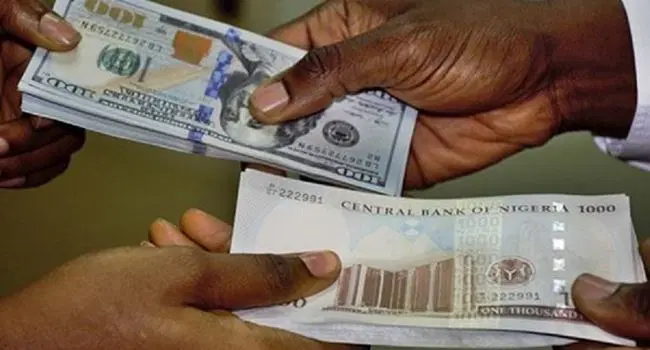
The Nigerian Naira began Thursday, January 15, 2026, with slight movements against the United States Dollar, trading at roughly ₦1,422.25 to ₦1,423.42 per dollar in the official Nigerian Foreign Exchange Market (NFEM), market data show.
In the informal or “black market”, the dollar remained more expensive, with Bureau De Change operators reporting buying rates around ₦1,488–₦1,495 and selling rates near ₦1,500–₦1,510 per dollar in major cities such as Lagos and Abuja.
On the official market, the Naira’s narrow trading range suggested a relatively stable start to the day, with price movements influenced by available foreign exchange liquidity and ongoing Central Bank of Nigeria (CBN) intervention efforts aimed at managing volatility.
The gap between the official and black‑market rates persists, reflecting differences in supply and demand between regulated financial channels and informal currency exchange segments. Traders and businesses continue to monitor these disparities as they affect costs for imports, travel allowances and education fees abroad.
Market outlook: Analysts say that the naira’s performance in the coming days will likely depend on factors such as crude oil price movements, which impact foreign reserves, the volume of trading in the official market, and policy measures related to interest rates and inflation management.
Traders and foreign exchange users are advised to track closing rates later in the day, as these figures often provide clearer insight into the currency’s near‑term direction and can inform business decisions and personal remittances.
Note: The official and black‑market rates can differ significantly due to liquidity conditions and market segmentation in Nigeria’s foreign exchange landscape.