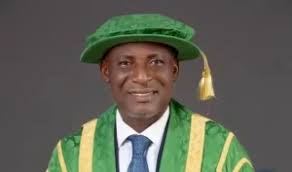

The use of an honorary doctorate title has come under renewed scrutiny following a clarification by the National Universities Commission, which stated that such awards are ceremonial and do not confer the right to use the “Dr.” prefix.
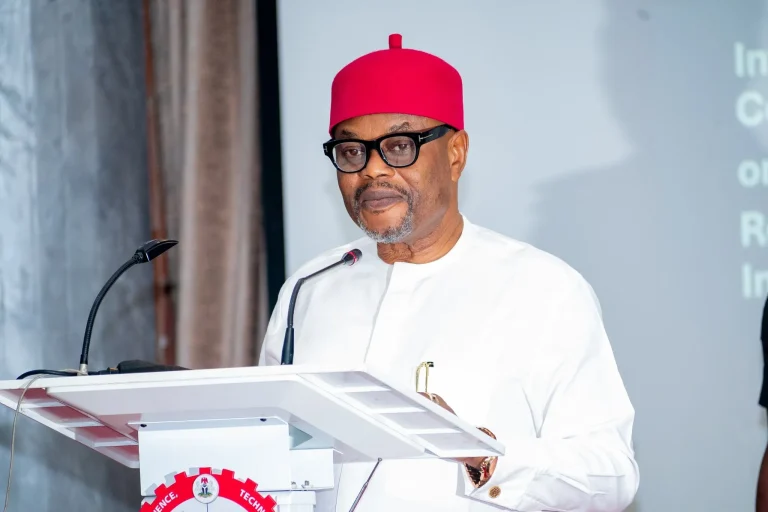
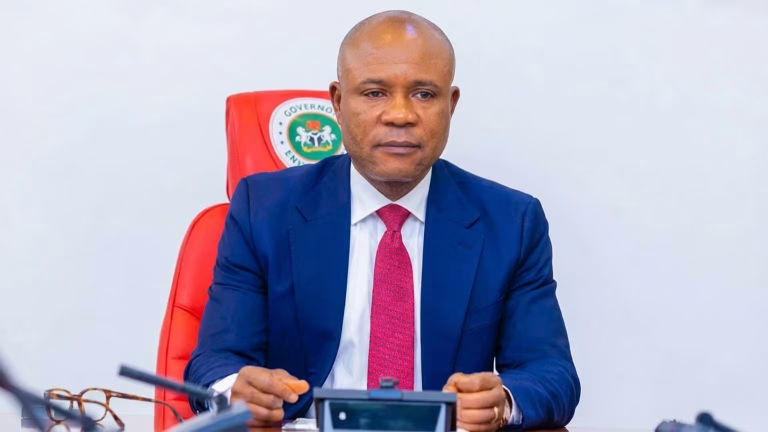
The clarification has drawn attention to Enugu State Governor, Peter Mbah, who holds an honorary doctorate and continues to be publicly addressed with the title.
The National Universities Commission explained that honorary degrees are conferred as recognition of contributions to society and are distinct from academic or professional doctorates earned through structured study and research.
According to the commission, the “Dr.” title is reserved for individuals who have completed accredited doctoral programmes or equivalent professional qualifications.
The honorary doctorate title issue has generated discussion among academic stakeholders and policy observers.
Concerns focus on the implications of using ceremonial recognitions in a manner that may suggest academic qualification.
Experts note that distinctions between honorary and earned titles are important for maintaining clarity within the education system.
An academic familiar with university regulations stated that honorary degrees are symbolic acknowledgements and should not be presented as professional credentials.
“An honorary doctorate is recognition, not qualification. Presenting it otherwise misleads the public,” the source said.
The National Universities Commission also cautioned that misuse of honorary titles may contribute to what it described as “title inflation,” where ceremonial honours are treated as formal academic achievements.
According to the commission, such practices could weaken public confidence in academic institutions and reduce the value of earned qualifications.
The honorary doctorate title debate extends beyond academic interpretation to issues of governance and public communication.
Analysts note that public officials are often expected to adhere strictly to regulatory guidelines, particularly those issued by national institutions.
Compliance with such directives is seen as part of broader accountability in public office.
Observers have pointed out that official titles used in government communications, public engagements, and policy documents carry institutional significance.
The consistent use of accurate titles is considered important for transparency and credibility in governance.
The matter has also attracted attention within policy circles and public discourse, where discussions have focused on standards, institutional authority, and the role of regulatory bodies.
The National Universities Commission remains the primary authority on university education standards in Nigeria, including guidelines on academic titles.
Efforts to obtain an official response from the Enugu State Government on the matter were not successful as of the time of reporting.
The honorary doctorate title issue highlights broader concerns about the use of titles in public life.
Analysts note that titles can influence public perception and should accurately reflect qualifications to maintain institutional integrity.
The development underscores the importance of clear distinctions between honorary recognition and academic qualification.
Maintaining these distinctions may support the credibility of Nigeria’s education system and reinforce regulatory standards.
It also reflects the role of institutions such as the National Universities Commission in setting and enforcing guidelines that shape public understanding of academic achievements.