

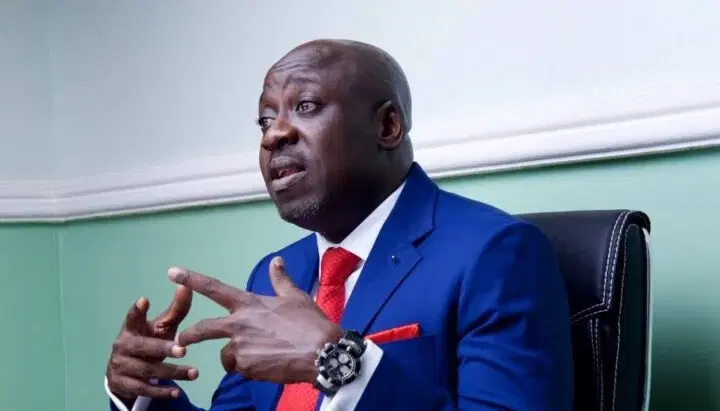
The African Democratic Congress has stated that a bad civilian government is more difficult to remove than a bad military government, highlighting concerns about Nigeria’s democratic system.
The position was expressed by Bolaji Abdullahi, National Publicity Secretary of the African Democratic Congress, during an interview where he addressed issues relating to governance, democracy and political developments in Nigeria ahead of the 2027 elections.
He spoke on broader national concerns, including economic reforms, political alignments and the role of opposition parties in the country.
Abdullahi stated that removing a civilian government through democratic processes can be more difficult compared to a military regime.
He also criticised recent economic policies, particularly the removal of fuel subsidy, describing both the previous system and its replacement as flawed.
According to him, the ADC would adopt a different approach by targeting subsidies at vulnerable groups rather than applying them broadly or removing them entirely.
He said: “We will not punish the poor people for the crime of the rich people.”
Abdullahi explained that the party’s policy direction would focus on investment in citizens through education, healthcare and job creation as a means of improving productivity and national development.
He added that progress should be measured by the number of people lifted out of poverty rather than growth in gross domestic product.
The ADC spokesperson also raised concerns about the impact of taxation and economic conditions on Nigerians, stating that current policies have increased the cost of living and limited access to essential services.
The remarks reflect the ADC’s position on governance and economic policy, as well as its emphasis on citizen-focused development and democratic accountability.