
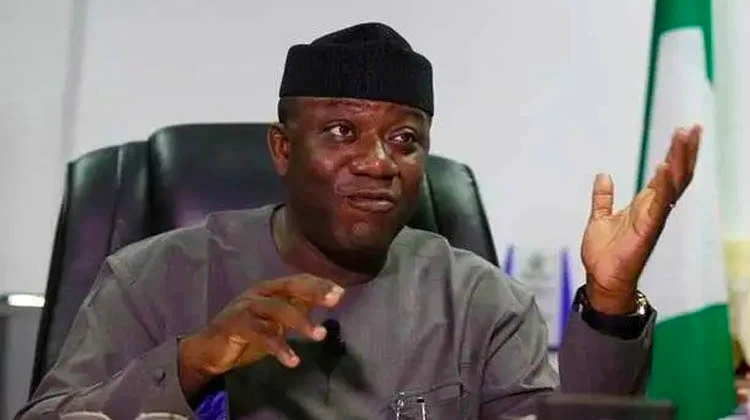
Former Ekiti State Governor Dr. Kayode Fayemi has denied claims that he held a closed-door meeting with former Kano State Governor Senator Rabiu Musa Kwankwaso, describing the reports as false and urging the public to disregard them.
The clarification was issued in a statement through Ahmad Sajoh, Head of Fayemi’s Media Office, on January 29, 2026.
The report that circulated on social media suggested that Fayemi and Kwankwaso met privately at Fayemi’s residence in Abuja for political discussions.
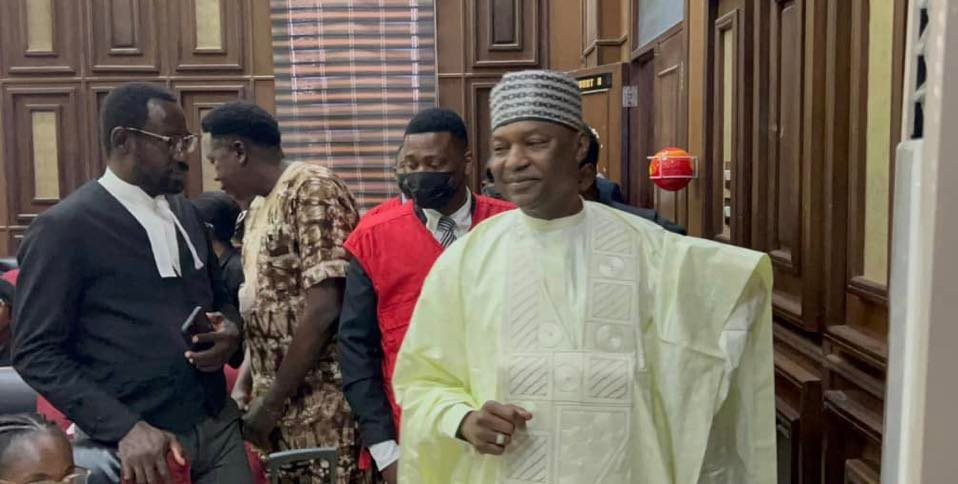
Fayemi’s office said the claim was incorrect and clarified that the two had only met once in the last year at a public book launch for former Attorney-General of the Federation Mohammed Bello Adoke, SAN, not in any private or political context.
“Dr Fayemi has only met Senator Kwankwaso once in the last year, and that occasion was at the public book launch of former Attorney-General of the Federation, Mohammed Bello Adoke, SAN,” the statement said, adding that no closed-door political meeting had taken place as suggested by the posts circulating online.
Fayemi’s statement acknowledged a longstanding personal friendship between him and Kwankwaso, dating back to their respective tenures as state governors, but stressed that the relationship is personal and non-partisan.
The statement underscored that personal associations should not be subject to partisan interpretation, especially in a politically charged environment.
The former governor also cautioned against attempts by political actors or online commentators to attach political motives to private relationships. He said many of his friends and associates span the entire spectrum of Nigeria’s political landscape, including individuals who are not actively involved in partisan politics or who belong to different political parties.
Fayemi’s clarification comes amid heightened political realignments ahead of the 2027 general elections, where defections, alliances and public engagements are increasingly scrutinised for strategic implications.
Speculation around meetings involving senior political figures can quickly gain traction on social media, especially during an election cycle.
Observers note that political narratives spread rapidly on digital platforms, sometimes outpacing verification by credible news organisations, creating opportunities for misinformation to affect public perception.
Fayemi’s denial aims to set the record straight and reinforce responsible public discourse about political associations.
The clarification also highlights broader concerns among public figures about how personal interactions are portrayed in political debates.
By emphasising the nature and context of his interaction with Kwankwaso, Fayemi’s office sought to dispel unfounded rumours and reiterate its commitment to transparent engagement with political developments.