




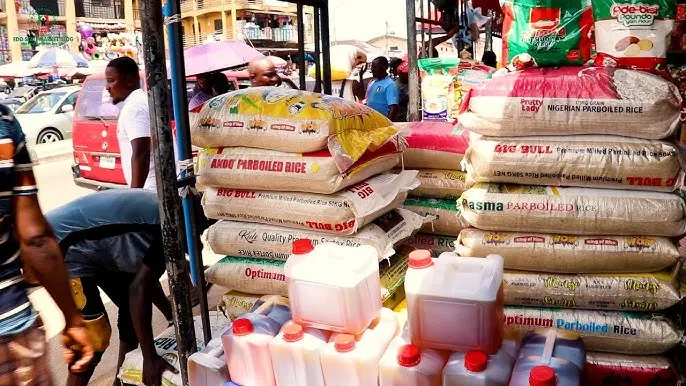
The Rice price rise in Nigeria has intensified after the National Bureau of Statistics (NBS) reported that the average price of a 50kg bag of local rice increased by 20.5 per cent to N112,000 in March 2026. The latest data shows continued pressure on staple food costs across the country, reflecting broader inflation trends in the food sector. The NBS disclosed the figures in its Selected Food Price Watch report, noting significant month-on-month increases in essential commodities.
The price of rice has remained a central indicator of food inflation in Nigeria due to its status as a staple consumed in most households. Over the past years, supply disruptions, production costs, and distribution challenges have contributed to volatility in market prices.
The Rice price rise has been closely tracked by the National Bureau of Statistics as part of its monthly inflation monitoring. The agency publishes food price reports that reflect changes in retail prices across major markets nationwide.
Nigeria’s rice market is shaped by local production levels, import policies, transport costs, and demand patterns. These factors collectively influence price movements across different regions and market segments.
According to the NBS report, the average price of a 50kg bag of local rice rose from N92,946 in February 2026 to N112,000 in March 2026, representing a 20.5 per cent increase.
The report also noted that other food items recorded increases during the same period, reflecting a broader inflationary trend in the food basket. Items such as beans, garri, onions, and eggs were listed among commodities with rising average prices.
The Rice price rise was identified as part of a wider pattern of monthly food inflation adjustments recorded by the statistical agency. The NBS explained that price variations differ across states depending on supply availability and market conditions.
For rice specifically, market observations indicate that both local and imported varieties have experienced upward pressure in pricing due to demand and supply imbalance.
The ongoing Rice price rise has direct implications for household spending and food security. As rice remains a primary staple, increases in its price tend to significantly affect consumer purchasing power.
Rising food costs also contribute to overall inflation, influencing economic planning for households and small businesses. Traders and distributors adjust prices frequently in response to supply chain conditions and procurement costs. The development highlights continued sensitivity in Nigeria’s food market, where staple commodities remain exposed to supply fluctuations and production constraints.