


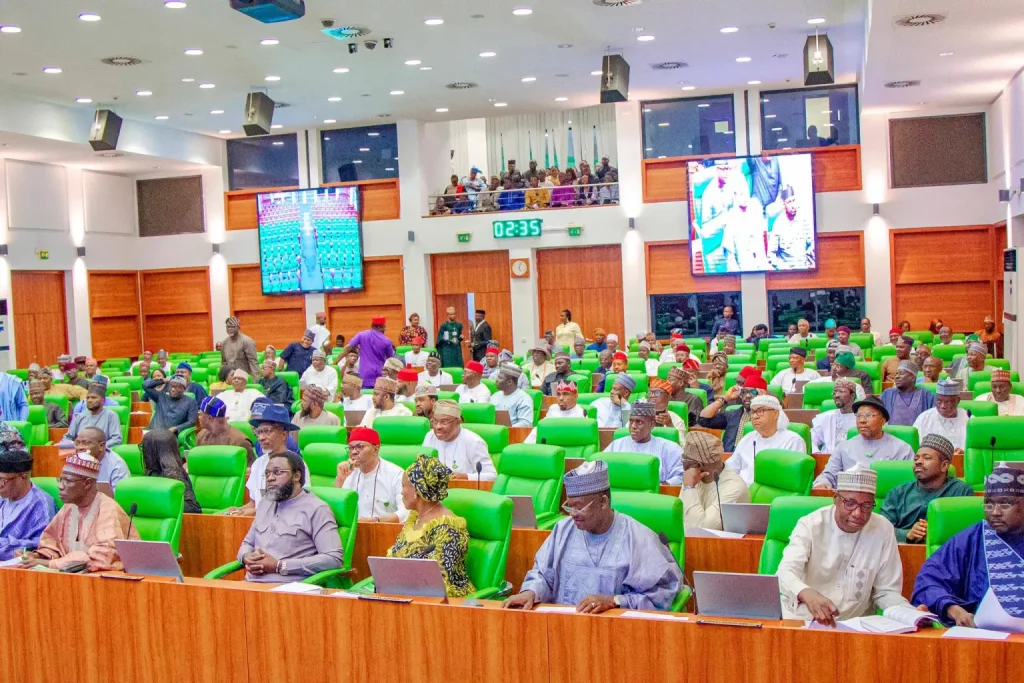
The House of Representatives has begun a detailed clause-by-clause review of President Bola Tinubu’s executive bill seeking to establish state police, signaling fresh momentum for one of Nigeria’s most significant constitutional reform proposals. Lawmakers handling the review indicated that the House may adopt the Senate-approved version of the legislation with only minor adjustments to accelerate its passage.
Chairman of the House Committee on Constitution Review and Deputy Speaker, Benjamin Kalu, said the committee intends to build on the legislative work already completed by the Senate to fast-track a constitutional amendment aimed at strengthening Nigeria’s security framework. Kalu recalled that the House had earlier passed its own State Police Constitution Alteration Bill on June 11, but later reversed that decision on July 14 after President Tinubu transmitted an executive version of the legislation to the National Assembly.
According to him, the President, as Commander-in-Chief of the Armed Forces, is well positioned to initiate comprehensive reforms capable of addressing Nigeria’s growing security challenges. He explained that the executive bill has already scaled first and second readings in the House, while the extensive consultations conducted during the National Assembly Open Week effectively satisfied the public hearing requirement.
Kalu urged committee members to carefully scrutinise every provision of the bill to ensure it aligns with the expectations of Nigerians. Describing the proposal as one of President Tinubu’s signature constitutional reforms, he noted that the President had consistently advocated a multi-layer policing system since serving as Governor of Lagos State.
He said the President’s continued support for state policing reflects consistency in his long-standing position on improving Nigeria’s internal security architecture. The Deputy Speaker also stressed that although the executive, legislature and judiciary operate independently, all arms of government share a common responsibility to pursue reforms that strengthen national security.
He explained that lawmakers convened outside the traditional parliamentary schedule because of the urgency attached to the legislation. According to Kalu, both chambers of the National Assembly are collaborating closely to ensure the constitutional amendment process is completed without unnecessary delays, expressing confidence that the bill will eventually receive presidential assent.
During the review, committee members will use the Senate-approved version of the executive bill as their primary working document. He noted that the Senate had already considered and adopted the proposal with a number of amendments, and copies of that version have been distributed to House members for detailed examination.
Kalu added that the executive bill largely mirrors the earlier House proposal but introduces additional provisions, including Section 31, covering interpretation, transitional arrangements, saving clauses and other consequential amendments designed to support implementation.
He disclosed that the Senate made about eight minor amendments, which the House committee will assess individually before deciding which ones to adopt. The ongoing review marks another significant step toward establishing a constitutionally recognised multi-tier policing system designed to improve internal security and strengthen law enforcement across Nigeria.