
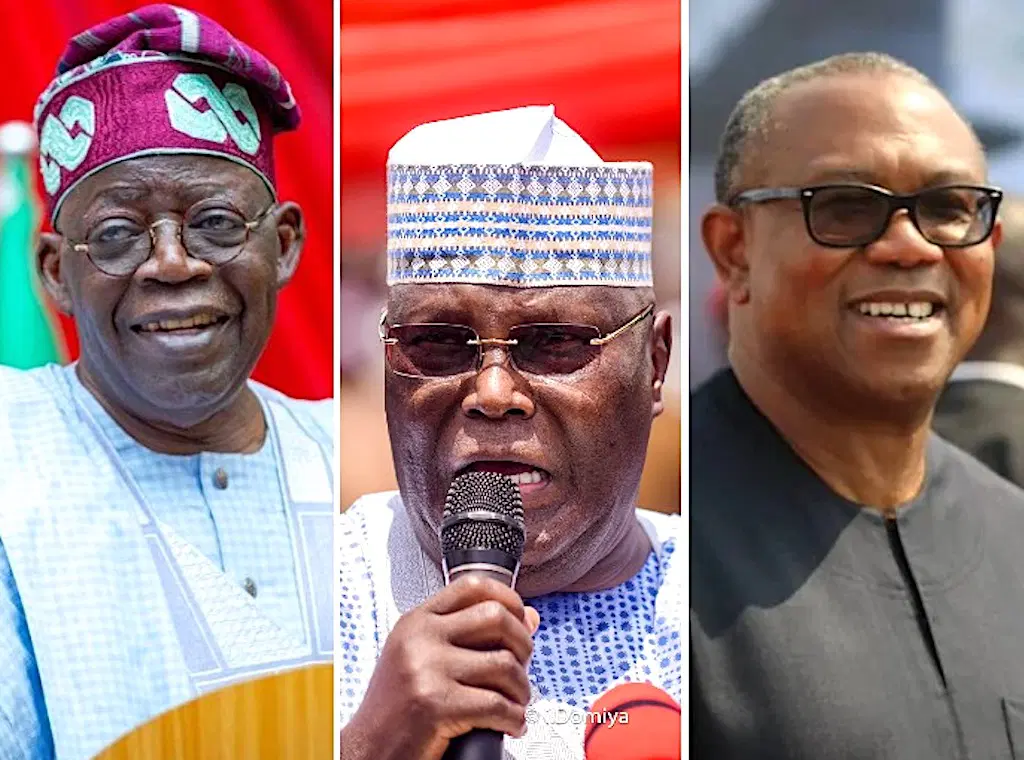
As political activities ahead of Nigeria’s 2027 general election intensify, the Northern voting bloc has once again become the centre of national political calculations, with President Bola Tinubu, former Vice President Atiku Abubakar and other leading contenders positioning themselves to secure support across the region.
While Northern Nigeria has long been regarded as a decisive electoral force, analysts argue that the political landscape has become increasingly fragmented since the exit of former President Muhammadu Buhari, making the region far more competitive than in previous election cycles.
Political discussions across Abuja continue to reflect growing interest in the North’s electoral significance. Private meetings involving governors, lawmakers, former ministers and party strategists have intensified as parties negotiate alliances and evaluate possible electoral strategies ahead of 2027.
Recent public exchanges between former Kano State Governor Rabiu Musa Kwankwaso and former Borno State Governor Ali Modu Sheriff have further fuelled debate over who, if anyone, can legitimately claim to command the Northern voting bloc. While Sheriff argued that Northern voters would not support Labour Party candidate Peter Obi, Kwankwaso dismissed the suggestion, insisting that no individual speaks for the entire region.
For years, Nigerian politics has been shaped by discussions surrounding the so-called “Buhari’s 12 million votes” narrative. The former president built a loyal following across large parts of Northern Nigeria through successive presidential contests before eventually winning power in 2015. Official election results, however, show that Buhari’s electoral strength fluctuated across different election cycles.
He polled over 12 million votes in both the 2003 and 2011 presidential elections but secured just over six million votes in 2007 when contesting against the late Umaru Musa Yar’Adua. Political observers argue that Buhari’s victories were influenced not only by personal popularity but also by changing political alliances, particularly the coalition that formed the All Progressives Congress (APC) ahead of the 2015 election.
Despite widespread political references to Northern Nigeria as a single electoral bloc, analysts note that the region has always contained multiple political traditions and voting interests.
Historically, political competition existed between the Northern People’s Congress (NPC) and the Northern Elements Progressive Union (NEPU), while later democratic periods witnessed the emergence of parties such as the National Party of Nigeria (NPN), People’s Redemption Party (PRP), All Nigeria Peoples Party (ANPP), Congress for Progressive Change (CPC) and eventually the APC.
Today, political priorities vary considerably across states.
Issues such as insecurity dominate parts of the North-East, while identity politics, land disputes and religious coexistence influence voting behaviour across sections of the North-Central. Urban centres including Abuja, Kaduna and Ilorin are also witnessing the emergence of younger voters whose choices increasingly revolve around governance, employment opportunities and economic conditions.
Political analysts argue that history offers little evidence that electoral popularity can automatically pass from one leader to another. While Buhari enjoyed widespread support across much of Northern Nigeria, they contend that his appeal resulted from a unique combination of personal reputation, political timing and national circumstances rather than permanent ownership of votes. The 2023 presidential election reinforced this argument, with Northern votes distributed among multiple candidates.
President Tinubu secured enough nationwide support to win the presidency, Atiku Abubakar maintained influence across parts of the North-East and North-West, Rabiu Kwankwaso retained strong backing in Kano, while Peter Obi expanded his appeal among younger and urban voters, particularly in parts of the North-Central.
With the next presidential election approaching, all major political parties are adopting different strategies to win over the Northern voting bloc. The APC believes its incumbency, governance record and nationwide political structures remain key advantages. Opposition parties, meanwhile, argue that economic hardship and public dissatisfaction have created opportunities for political change, while newer political platforms hope to strengthen support among younger and issue-focused voters.
Political observers say the major lesson emerging from the post-Buhari era is that Northern Nigeria can no longer be viewed as a monolithic voting bloc. Instead, electoral success in 2027 may depend less on inherited political loyalties and more on candidates’ ability to address the region’s diverse economic, security and governance concerns while earning the confidence of voters across its different communities.