

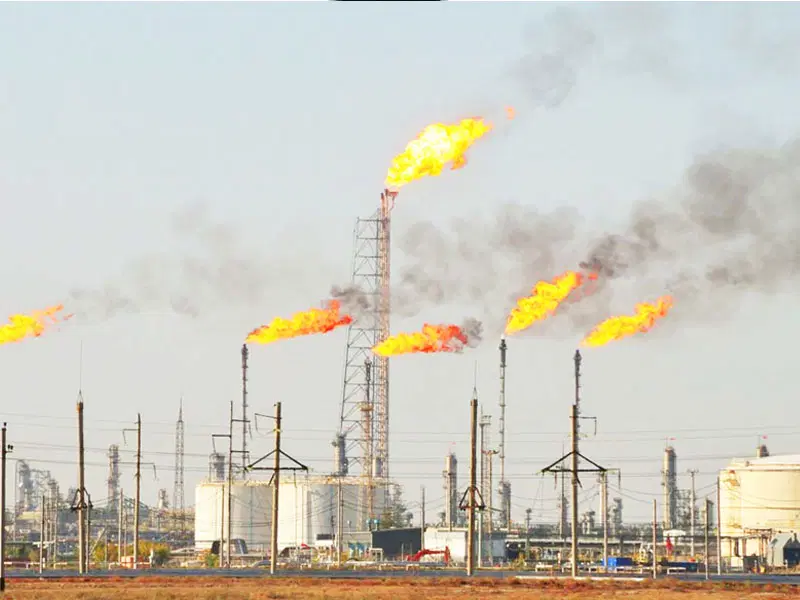
Nigeria’s drive to become a gas-powered economy by 2030 is facing renewed scrutiny after fresh data revealed that persistent Nigeria gas flaring activities deprived the country of an estimated 3,100 gigawatt-hours (GWh) of electricity generation potential in May 2026.
The development comes despite years of government efforts to promote gas utilisation under the Federal Government’s “Decade of Gas” initiative, which seeks to improve electricity supply, expand industrial use of natural gas and increase exports by 2030.
Official records released by two government agencies presented conflicting figures on the volume of gas flared during the period. The Nigerian Upstream Petroleum Regulatory Commission (NUPRC) reported that 17.6 million standard cubic feet (MMSCF) of gas was flared in May 2026.
However, the National Oil Spill Detection and Response Agency (NOSDRA) placed the figure significantly higher at 30.7 million standard cubic feet (MSCF). Despite the disparity, both reports point to the continued challenge of reducing routine gas flaring across Nigeria’s oil-producing regions.
According to NOSDRA’s latest report, the gas flared during May had an estimated commercial value of $107.5 million. The agency also disclosed that companies responsible for the flaring, including several international oil companies, are liable to pay approximately $61.4 million in penalties for violating gas flaring regulations.
NOSDRA’s breakdown showed that most of the flaring occurred at onshore facilities. Gas flared from onshore operations climbed by 62.3 per cent, reaching 22.3 MSCF, while offshore operations accounted for 8.4 MSCF.
The environmental impact remained substantial, with the agency estimating that the flared gas released approximately 1.6 million tonnes of carbon dioxide into the atmosphere during the month. NOSDRA noted that gas flaring has continued in Nigeria since the 1950s despite repeated efforts to eliminate the practice.
The continued loss of natural gas has also raised concerns about Nigeria’s electricity sector. Industry checks indicate that inadequate gas supply to Electricity Generation Companies (GenCos) remains one of the major reasons the country struggles to consistently generate more than 4,000 megawatts of electricity for homes and businesses.
Government documents reviewed on the country’s gas strategy identify increased gas utilisation for power generation and stronger investment across the gas value chain as critical priorities for achieving the 2030 target. However, analysts say sustained gas flaring suggests that investments in the sector have yet to translate into improved gas production and domestic utilisation.
Meanwhile, the Renevlyn Development Initiative (RDI) has called on the Federal Government to prohibit gas flaring completely. The organisation argued that existing financial penalties have failed to discourage oil companies, claiming many operators simply pay the fines instead of investing in infrastructure to stop routine flaring.
RDI cited data from the Nigerian Oil Spill Monitor covering 2012 to 2025, showing that oil companies operating in Nigeria paid an estimated $646 million in gas flaring penalties in 2025, the highest annual figure recorded within the last five years. The group maintained that stronger enforcement measures and an outright ban would better support Nigeria’s environmental commitments while helping the country maximise its gas resources for electricity generation and economic development.