

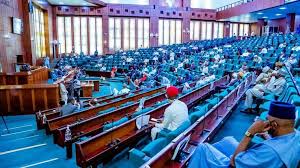
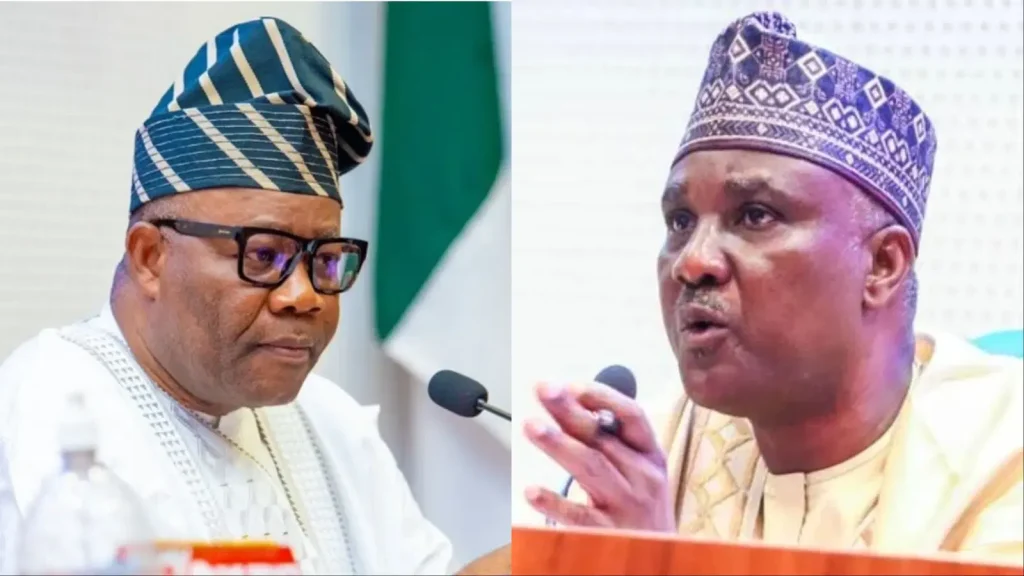
The Socio-Economic Rights and Accountability Project (SERAP) has issued a seven-day ultimatum to Senate President Godswill Akpabio and Speaker of the House of Representatives Tajudeen Abbas, demanding immediate steps to recover and return N110 billion spent on vehicle procurement and support allowances for federal lawmakers. The organisation said the demand follows a recent judgment of the Federal High Court in Lagos, which declared the expenditure unlawful and inconsistent with constitutional and procurement requirements.
According to SERAP, lawmakers who benefited from the schemes should refund all monies, allowances, and benefits derived from the spending and return them to the public treasury. The call has intensified debate over transparency, accountability, and public spending within the National Assembly.
At the centre of the controversy is a judgment delivered by Justice Yellim Bogoro in Suit No. FHC/L/CS/1606/2023.
The court reportedly found that N40 billion spent on procuring 465 vehicles for lawmakers, alongside N70 billion paid as support allowances to newly elected legislators, breached procurement laws, constitutional obligations, and public trust principles. Following the ruling, SERAP argued that judicial findings of unlawful expenditure require concrete consequences, including restitution of public funds.
In a letter dated June 20, 2026, and signed by its Deputy Director, Kolawole Oluwadare, the organisation maintained that accountability cannot be achieved if beneficiaries continue to retain gains derived from spending declared unlawful by a competent court.
The organisation said allowing lawmakers to keep benefits obtained through actions judged unlawful would undermine public confidence in democratic institutions.
SERAP argued that restitution is necessary to uphold the rule of law and reinforce constitutional principles of accountability and good governance. According to the group, the judgment established evidence of self-dealing, conflict of interest, and failure to comply with statutory safeguards governing public expenditure.
It noted that while the court did not expressly order a refund of the N110 billion, the judgment created a strong legal and factual basis for recovering the funds when read alongside constitutional provisions, anti-corruption laws, and Nigeria’s international obligations. SERAP stressed that public officials should not retain benefits linked to conduct that has been judicially determined to be unlawful.
Beyond the demand for repayment, SERAP urged the National Assembly to introduce reforms aimed at preventing similar controversies in the future. The organisation called for the establishment of effective compliance mechanisms to ensure that future procurement processes strictly follow due process requirements and principles of transparency, accountability, and value for money.
It also recommended that lawmakers institutionalise public hearings on the National Assembly’s budget during every budget cycle. According to SERAP, publishing detailed legislative budget and expenditure information would improve public scrutiny, encourage citizen participation, and strengthen confidence in democratic governance.
SERAP cited Section 15(5) of the 1999 Constitution, which mandates the state to abolish corrupt practices and abuse of power. The organisation argued that where a court identifies evidence of unlawful expenditure, public institutions have a constitutional responsibility to reverse the consequences and remedy the damage caused.
It maintained that accountability is a core constitutional value and that the National Assembly must demonstrate leadership by complying fully with the spirit of the court’s judgment. According to SERAP, reimbursement of the funds would help restore public trust, deter future abuses, protect citizens’ right to development, and ensure that public resources are used for the collective benefit of Nigerians rather than private interests.
The organisation warned that if no satisfactory action is taken within seven days, it will initiate further legal proceedings against the leadership of the National Assembly and other relevant parties.
SERAP said the proposed action would seek to compel recovery of the funds and ensure compliance with constitutional and legal obligations. As the deadline approaches, attention is expected to focus on how the National Assembly responds to mounting calls for accountability over the spending that has now become the subject of legal and public scrutiny.
The dispute over the National Assembly refund N110bn demand has opened a broader conversation about legislative accountability, procurement compliance, and public trust in government institutions.
With SERAP threatening further legal action and relying on a Federal High Court judgment as its foundation, the coming days could determine whether lawmakers face pressure to reverse benefits linked to the controversial expenditure or pursue legal avenues to challenge the growing calls for restitution.