



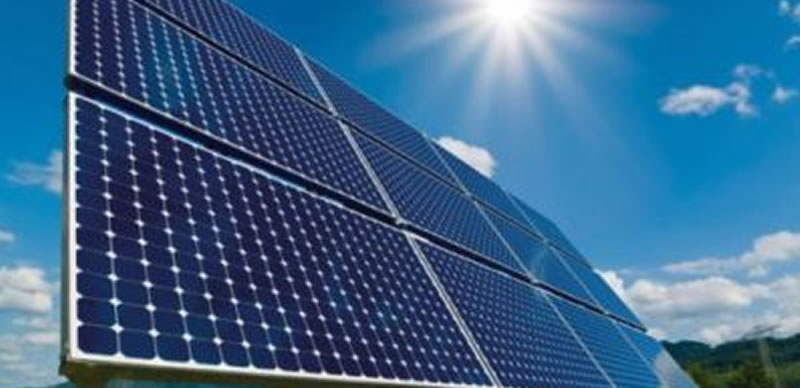
Nigeria is pursuing an ambitious energy expansion strategy through Nigeria Solar Projects valued at approximately $11 billion, with the country targeting 209,000 megawatts of installed solar capacity by 2050. According to a report by IIR, 53 large-scale solar developments are currently underway nationwide as part of efforts to strengthen electricity supply and improve access to power.
The projects form part of Nigeria’s broader energy transition agenda, which seeks to diversify electricity generation sources and increase the contribution of renewable energy to the national energy mix.
The IIR report noted that growing investor interest in the renewable energy sector is driving the expansion. The ongoing projects are expected to play a significant role in meeting future electricity demand while supporting the country’s long-term sustainability objectives. Alongside utility-scale developments, the Federal Government is also advancing rural electrification programmes through solar mini-grids and off-grid power systems aimed at underserved communities.
According to the report, 53 Nigeria Solar Projects are currently being tracked across the country. These investments are expected to contribute substantially to Nigeria’s plan to expand electricity generation capacity over the coming decades.
Under an initiative coordinated by the Rural Electrification Agency (REA), the Federal Government is deploying more than 1,300 solar mini-grids and off-grid electricity systems nationwide. The programme includes 250 interconnected mini-grids designed to supply electricity directly into the national grid. The initiative seeks to improve power stability while reducing dependence on diesel-powered generators in rural communities.
The REA disclosed that the programme is supported by $750 million in public funding and is expected to attract an additional $1.1 billion in private-sector investment. Speaking on the initiative, REA Managing Director Abba Aliyu described it as a major milestone in the country’s renewable energy development.
“For the first time, we are witnessing the implementation of the biggest publicly funded renewable electricity project in the entire world. It is a $750m project that will catalyse $1.1bn in private sector funding to deploy 1,350 mini-grids across the country,” Aliyu said. He added that renewable energy is becoming a central pillar of Nigeria’s future electricity strategy.
“For the first time in the history of the country, the Federal Government is positioning the renewable energy sector of the Nigerian economy as the alternative source of electricity in the country,” he stated.
The REA said more than 1,000 mini-grid systems have already been deployed nationwide, with over half financed directly by the agency. Nigeria is also implementing the Distributed Access through Renewable Energy Scale-up programme, supported by the World Bank. The initiative promotes solar mini-grids, standalone solar systems and battery storage technologies to improve electricity access.
The programme aims to replace more than 250,000 diesel generators while expanding access to reliable and clean energy solutions. Data from the Global Solar Council showed that Nigeria added 803MW of solar capacity in 2025, bringing total installed solar capacity to approximately 1,019MW.
The expansion of Nigeria Solar Projects aligns with continental electrification efforts, including the World Bank-backed Mission 300 initiative, which aims to connect 300 million Africans to electricity by 2030.
While gas-powered plants remain Nigeria’s primary source of electricity generation, renewable energy currently contributes about 23 per cent of the country’s energy mix. The Federal Government has set a target of increasing renewable energy’s share to 30 per cent by 2030 and 82 per cent by 2050 as part of its net-zero emissions commitment.
The growing pipeline of Nigeria Solar Projects highlights Nigeria’s push toward renewable energy-driven development. With billions of dollars in planned investments and large-scale deployment of solar infrastructure, the country is positioning solar energy as a key component of its future electricity supply strategy and long-term economic development goals.