

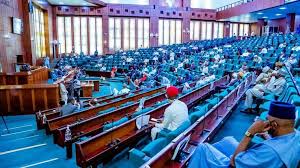

The Federal Account Allocation Committee (FAAC) meeting to distribute January 2026 federally collected revenue was stalled after state government representatives rejected an N1.9 trillion distributable figure, officials said.
The disagreement emerged during FAAC deliberations in Abuja on January 30, 2026, hindering the revenue allocation process for the month.
The rejection stemmed from concerns among state officials over unresolved issues related to the 13 per cent derivation fund, particularly how revenue from newly discovered or disputed oil and gas fields should be allocated among producing states, according to sources familiar with the talks.
Officials said the discord centred on the N1.9 trillion figure presented for distribution, which included crude oil revenue, value‑added tax (VAT), import and excise duties, and other federally collected sums earmarked for sharing among the federal, state and local government tiers as prescribed by law.
The FAAC allocates revenue based on statutory formulas and contributions from various revenue streams to support government operations nationwide.
State representatives argued that the figure did not sufficiently account for adjustments related to oil production data, especially from fields under dispute between producing states, and called for further verification before allocation could proceed.
Some state authorities also insisted on a transparent breakdown of revenue components to ensure accuracy in the distribution process.
A source who attended the FAAC meeting said talks were adjourned to allow further consultations between the Revenue Mobilisation Allocation and Fiscal Commission (RMAFC) and state finance officials on the contested figures.
“There was no consensus. States said they could not accept the distributable amount without clarity on accounting data, derivation entitlements and unresolved adjustments,” the source said on condition of anonymity.
FAAC comprises representatives of the Federal Government, 36 state governments, the Federal Capital Territory (FCT) and local government associations.
It meets monthly to review Federal Inland Revenue Service and Nigeria Customs Service collections, among other receipts, before issuing distributable figures.
The impasse highlights growing tensions over fiscal data transparency, derivation entitlements and revenue sharing mechanics amid ongoing debates over national fiscal federalism and equitable resource allocation.
Analysts say disagreements at FAAC meetings can delay funding for critical services and disrupt planning for state and local governments that depend on timely allocations.
State finance officials are expected to reconvene with RMAFC and FAAC representatives ahead of a rescheduled meeting, where a revised distributable figure and agreed adjustments will be presented for consideration and approval.
Continued delays could affect government operations and budgetary processes across the three tiers of government.
Observers note that resolving disputes over revenue distribution formulas and data reconciliation remains central to strengthening fiscal federalism and enhancing trust among Nigeria’s constituent governments.
Prompt resolution of the impasse is considered essential to avoid further disruptions in monthly FAAC allocations.