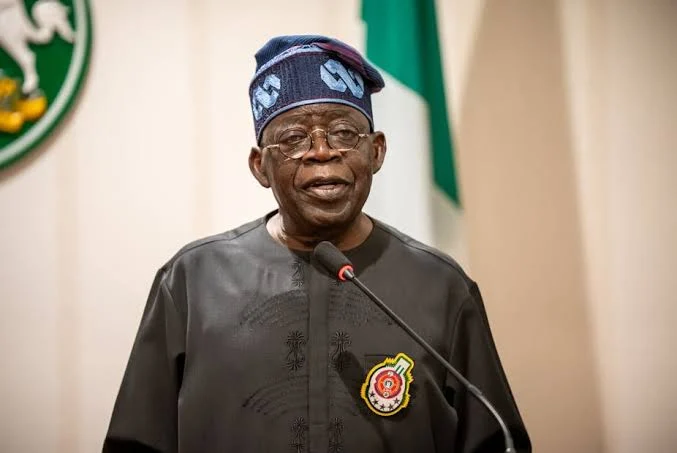

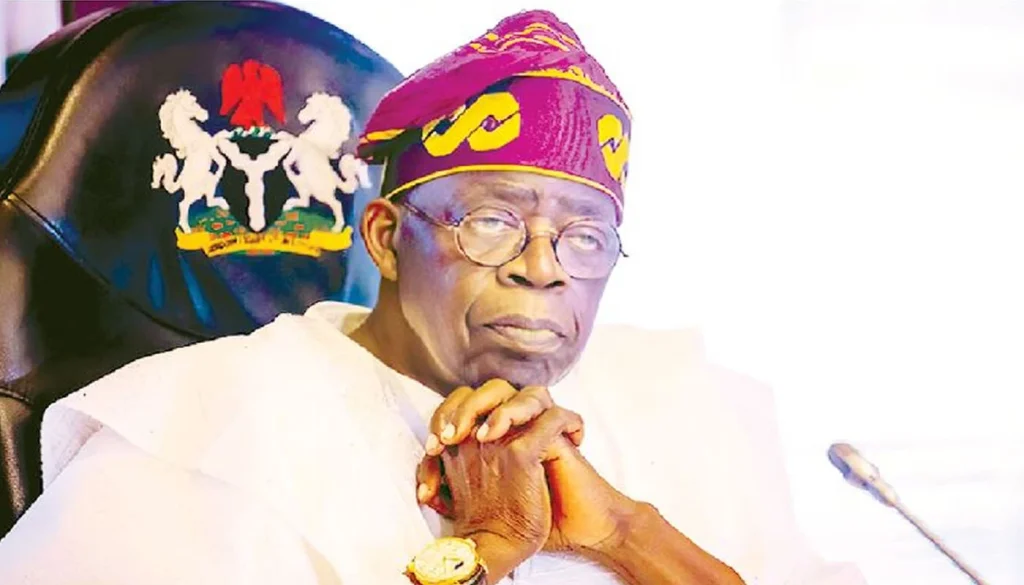
Governors of the All-Progressives Congress (APC) from the South‑East and critical party stakeholders have formally endorsed President Bola Ahmed Tinubu for a second term, pledging to deliver bloc votes from the region in the 2027 presidential election.
The endorsement was issued at the South‑East APC Stakeholders’ Meeting, themed “Izu Umunna,” held on Saturday at the Presidential Hotel, Enugu.
The meeting brought together governors, lawmakers, party elders, and leaders from the zone, who resolved to align fully with the ruling party and reject politics driven by individual ambitions that they said historically weakened the region’s influence in national affairs.
Governor Hope Uzodimma, Chairman of the South‑East Governors’ Forum and Governor of Imo State, said the region could no longer afford political isolation and underscored the importance of strategic alignment with the centre ahead of the 2027 polls.
“Politics is pay as you earn. No zone can produce a president alone. If we continue to vote provincially, we will remain on the sidelines of national power,” Uzodimma said, stressing the need for a unified front.
Uzodimma recalled the South‑East’s minimal contribution of about six per cent to APC votes in the 2023 presidential election, which he said undercut the region’s bargaining power within the party.
He highlighted the APC’s growing footprint across the South‑East, with the party now controlling three out of five states and increased legislative representation.
Governor Peter Mbah of Enugu State described the endorsement as a “paradigm shift grounded in pragmatism,” noting that alignment with the Federal Government had facilitated infrastructure interventions such as the Eastern Railway corridor revival, gas and energy projects, and the concession of Enugu Airport. He said these developments reflect tangible gains from cooperation with the centre.
Ebonyi State Governor Francis Nwifuru expressed confidence that all South‑East governors would be APC members by 2027, urging party leaders to embrace unity and manage the region’s political realignment effectively.
The endorsement motion was moved by former Senate President Pius Anyim and seconded by ex‑Senate President Ken Nnamani, both of whom warned that continued regional marginalisation would persist if the zone failed to engage strategically in national politics.
A communiqué issued at the end of the meeting unanimously declared Tinubu as the APC’s sole presidential candidate for 2027 and outlined plans to mobilise human, material, and political resources to secure bloc votes across Abia, Anambra, Ebonyi, Enugu, and Imo states.
The endorsement attracted criticism from some quarters. Apostle Eugene Ogu, a former Chairman of the Petecostal Fellowship of Nigeria in Rivers State, condemned the gesture, arguing that unresolved regional grievances and perceived lack of federal presence in infrastructure and services could undermine support.
He called for deeper reforms and independence for the region’s political aspirations.
As Nigeria’s political calendar for 2027 continues to unfold, the South‑East APC’s pledged commitment to President Tinubu marks a notable early alignment with the ruling party’s re‑election efforts and underscores evolving electoral dynamics in a region long considered a key political battleground.