


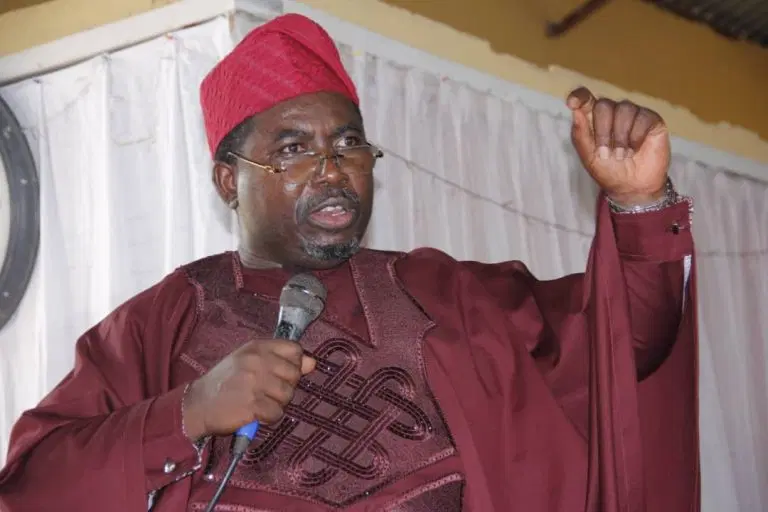
PDP crisis over, Minister of the Federal Capital Territory, Nyesom Wike, has declared, stating that the internal conflict within the Peoples Democratic Party has subsided and that the party is now focused on reconciliation and rebuilding.
He also announced that the party’s doors remain open for former members willing to return.
Wike made the remarks during a media interaction in Abuja, where he addressed recent developments within the party following its national convention.
He described the period of internal disagreements as a phase that has now passed, urging members to move forward collectively.
“As far as I’m concerned, the convention has come and gone. People are trooping in.
I will say, the door is open. Yes, we have had crisis. Now the crisis is over. Do we still have to shut our doors? No. Certainly not,” Wike said.
The statement that PDP crisis over reflects an effort to stabilise the party after months of internal disputes that led to factional divisions and legal battles.
The crisis, which intensified in 2025, involved disagreements over leadership structures and parallel conventions held by rival groups within the party.
Wike emphasised that politics should not be approached as a “do or die” affair, noting that such an attitude makes reconciliation difficult.
He likened political engagement to a competitive but cooperative process, stressing that unity is necessary for the party’s progress.
“Politics is not a fight to finish. It’s like a game, like football. If you see it as a do or die, it becomes difficult to reconcile,” he said, urging party members to prioritise collective goals over personal differences.
The declaration that PDP crisis over also comes with indications that former members who had left the party are beginning to signal interest in returning.
Wike noted that the current political environment within the party is becoming more inclusive, creating room for reconciliation and reintegration.
He further stated that the party must focus on rebuilding its structure and strengthening its position ahead of future elections.
According to him, the emphasis should now be on active participation, mobilisation, and organisational development.
Addressing aspirants and party stakeholders, Wike highlighted the importance of visibility and grassroots engagement.
He cautioned that political relevance is determined by consistent involvement rather than titles or affiliations alone.
The PDP crisis over declaration is expected to influence ongoing political realignments, particularly as parties begin early positioning ahead of the 2027 general elections.
Analysts note that internal stability is critical for opposition parties seeking to consolidate support and present a unified front.
The development signals a shift toward reconciliation within one of Nigeria’s major political parties.
A stable internal structure may enhance the party’s ability to organise, mobilise supporters, and compete effectively in future elections.
It also underscores the role of internal democracy and conflict resolution in sustaining political institutions.
Reduced factional disputes may improve public confidence and strengthen party cohesion.