




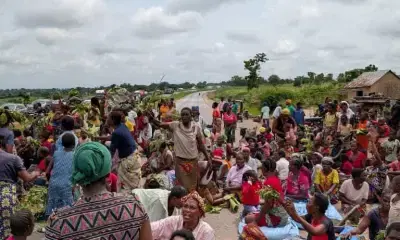
Nigeria currently has about 3,725,593 internally displaced persons (IDPs) living across approximately 3,900 camps and settlements nationwide due to ongoing insecurity.
Data compiled from the International Organisation for Migration’s Displacement Tracking Matrix, the National Bureau of Statistics, humanitarian agencies and government officials indicates that displacement remains a major humanitarian challenge across the country.
The figures represent estimates because displacement patterns continue to change as communities are affected by security incidents in different parts of Nigeria.
The displacement crisis has been linked to several forms of insecurity affecting different regions of the country.
These include insurgency in the North-East, banditry in the North-West, farmer-herder conflicts in the North-Central and communal clashes in parts of the South.
The large number of displaced persons means Nigeria’s IDP population is larger than the population of at least 63 countries with fewer than 3.7 million residents, based on United Nations population estimates.
Examples of countries with populations below that figure include Uruguay, Jamaica, Qatar, Namibia and Botswana.
Across several northern states, displacement camps have become a long-term feature as communities continue to experience attacks and insecurity.
Many affected residents were forced to leave their homes after attacks by terrorists, bandits, armed herders, cattle rustlers and kidnappers who invaded communities, destroyed property and abducted residents.
The displacement has left thousands of families without permanent homes, forcing them to depend on temporary settlements and humanitarian support.
The continued displacement of millions of Nigerians highlights the humanitarian impact of persistent insecurity across several regions of the country.