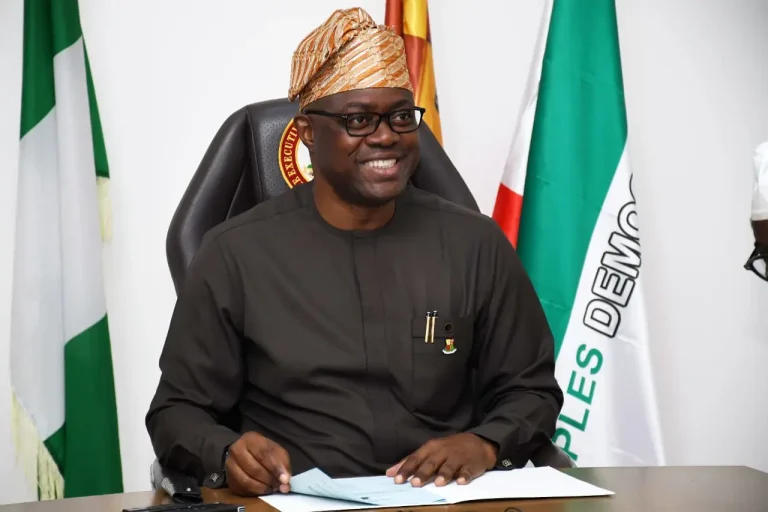

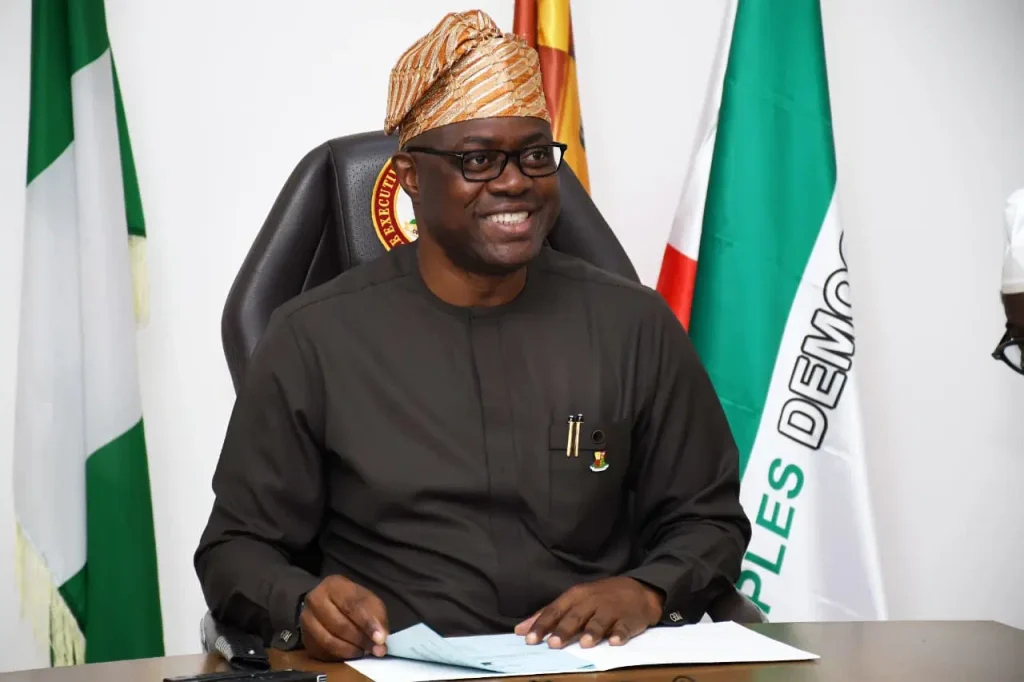
One party state concerns have been raised by Oyo State Governor, Seyi Makinde, who warned that Nigeria may be drifting toward a political structure where opposition voices are weakened.
He made this known in a newsletter titled “The business of governance”, where he addressed national political developments.
Makinde stated that recent events suggest a growing imbalance in the political space.
He noted that opposition parties appear to be under pressure, with their influence declining in ways that could affect democratic competition.
According to him, voices that challenge the current political direction are increasingly facing resistance.
“Voices that speak up against Nigeria devolving into a one-party state are being openly threatened. Opposition is being fragmented, constrained, or pushed to the margins,” he said.
The one party state warning reflects concerns about the sustainability of Nigeria’s democratic system.
Makinde emphasised that democracy relies on the presence of multiple active political actors who can provide alternatives and hold government accountable.
He explained that when opposition structures weaken, the system risks losing balance.
This, he said, could reduce scrutiny of policies and limit citizens’ ability to make informed choices during elections.
Makinde added that the perception of a one party state may discourage public participation in politics.
He noted that some citizens may feel their involvement has limited impact if political competition appears restricted.
He stressed that Nigeria has not yet reached that point but cautioned against complacency.
According to him, early recognition of the trend is necessary to prevent further erosion of democratic principles.
The governor also highlighted the importance of institutional independence.
He noted that strong institutions are essential in ensuring fairness, transparency, and equal opportunities for all political participants.
The one party state concern comes amid ongoing political realignments, internal disputes within opposition parties, and broader debates about governance and political inclusion.
These developments have contributed to discussions about the future direction of Nigeria’s democracy.
Makinde reiterated that democracy thrives on diversity of opinions.
He said inclusive participation, open dialogue, and respect for dissent are critical elements in maintaining a functional political system.
The warning underscores the need to strengthen democratic institutions and ensure political inclusiveness.
A competitive political environment is essential for accountability and effective governance.
Maintaining balance within the political system may help sustain public confidence and encourage broader civic engagement.