
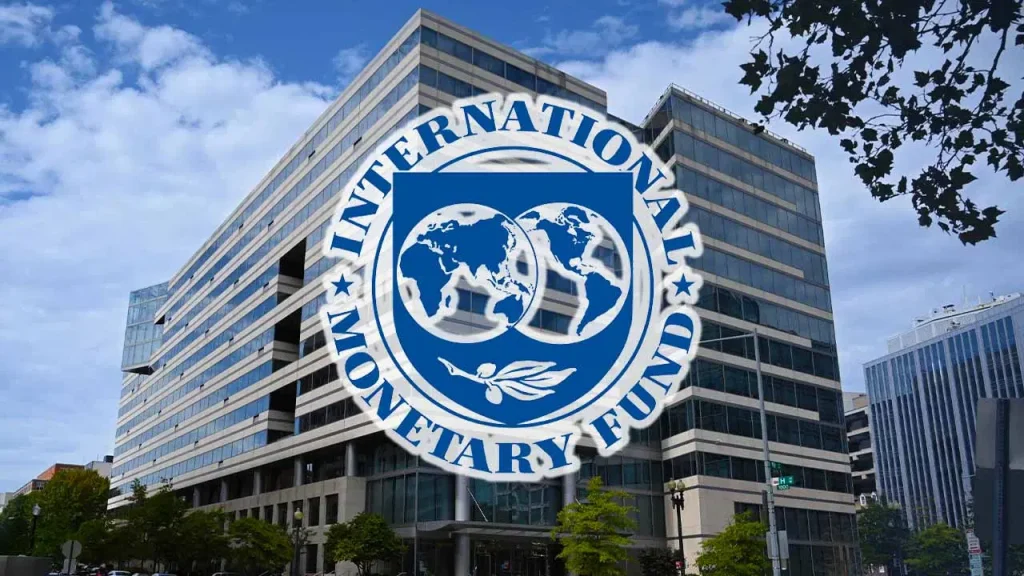
The International Monetary Fund (IMF) has revised Nigeria’s economic growth projection for 2026 upward to 4.4 percent, signalling strengthened prospects for the country’s economy. The revision was disclosed in the IMF’s January 2026 World Economic Outlook (WEO) Update, titled Global Economy: Steady amid Divergent Forces.
According to the IMF, Nigeria’s economy is expected to maintain a steady expansion path, rising from 4.1 percent in 2024 to 4.2 percent in 2025 and reaching 4.4 percent in 2026. This latest estimate marks a 0.2 percentage point upward revision from the Fund’s October 2025 projection.
The IMF’s growth forecast comes in the context of ongoing macroeconomic reforms and relative stability in key economic indicators. Earlier projections by international institutions also suggested improved performance for Nigeria’s economy in 2026. For instance, the World Bank had similarly revised its forecast to 4.4 percent growth this year.
The global outlook, as presented in the WEO, shows a resilient but uneven world economy with an expected global growth rate of 3.3 percent in 2026.
The IMF noted that this reflects a balance between headwinds from shifting trade policies and tailwinds from technology-driven investments and accommodative financial conditions.
In its report, the IMF highlighted several factors underpinning the upward revision for Nigeria. Improved macroeconomic conditions, ongoing structural reforms, and stabilising financial conditions were cited as supporting growth.
However, the Fund also identified risks to the outlook, including escalating geopolitical tensions, renewed trade protectionism, and high public debt and fiscal deficits, all of which could exert upward pressure on long-term interest rates and introduce volatility.
The IMF’s outlook for sub-Saharan Africa projects a regional growth acceleration to 4.6 percent in 2026 and 2027, attributed to macroeconomic stabilisation and continued reform efforts across key economies.
This upgraded forecast represents a vote of confidence in Nigeria’s economic rebound, reflecting progress in policy implementation and reform momentum.
A sustained growth rate of 4.4 percent has implications for job creation, investment, and fiscal planning. However, the IMF has emphasised the importance of addressing structural constraints and strengthening fiscal buffers to maintain economic stability.
The IMF also stressed the role of central bank independence and the need for well-targeted fiscal measures with clear sunset provisions to ensure that short-term interventions do not undermine long-term macroeconomic goals.
Nigeria’s upgraded growth outlook by the IMF highlights positive economic momentum. To sustain this trajectory, authorities are encouraged to maintain structural reforms, improve fiscal coordination, and build resilience against external shocks.
Continued monitoring of economic indicators and agile policy responses will be critical to realising the forecasted expansion in 2026 and beyond.