
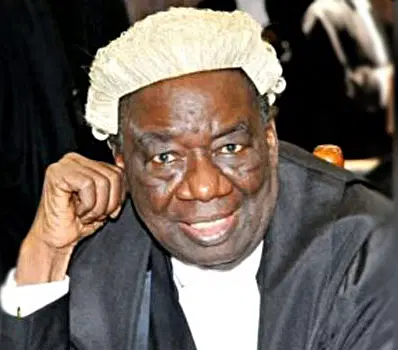
Veteran lawyer and **First Republic minister, Chief Osuolale Abimbola Richard Akinjide (SAN), urged Nigerians to oppose any attempt to seize a radio station and broadcast on behalf of the public using the phrase “fellow countrymen”,
saying such acts threaten democratic order and freedom, commentators recalled on Thursday, January 15, 2026. Akinjide’s message was referenced in speeches and discussions about Nigeria’s political history and democratic principles following his death.
Akinjide, who served as Minister of Education in the First Republic, made the remark in earlier public presentations of excerpts from a historical book on coups in Nigeria.
He said citizens should resist any broadcast issued after a forceful takeover of a radio station by individuals claiming to speak for the nation.
His warning reflected lessons drawn from Nigeria’s history of military coups and political instability. Akinjide spent 18 months in detention after the January 1966 coup and frequently spoke about the dangers of unconstitutional power grabs.
He emphasised that seizing a broadcasting platform and addressing the public under false authority undermines democratic norms and could incite instability.
While the Vanguard article did not publish the full context of the remark, Akinjide’s call for vigilance has been cited in historical accounts of Nigeria’s challenges with coups and governance.
The phrase “say no if anybody seizes a radio station and says ‘fellow countrymen’” has become symbolic of calls to defend constitutional order against unlawful power grabs.
Akinjide’s long career included serving in the cabinets of past governments and contributing to constitutional discussion, and his experiences during conflicts and coups shaped his views on safeguarding democratic institutions.
His caution against unconstitutional use of national airwaves underscores broader concerns about protecting media freedom and civil liberties in Nigeria’s democratic system.
Next steps: Analysts and civil society groups frequently reference Akinjide’s remarks in debates on media freedom, democratic principles and the rule of law, especially when discussing the role of broadcasting platforms in public life and national stability.