



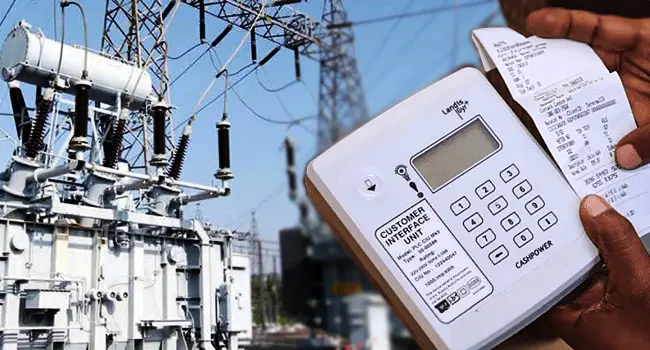
The Federal Government’s strategy to strengthen liquidity in the power sector through the issuance of a N1.23 trillion Power Sector Bond faces heightened risk as electricity sector debt rose 62.5% to N6.5 trillion by the end of 2025, up from N4 trillion at the beginning of the year.
Industry data shows that the surge in liabilities could undermine investor confidence and the overall effectiveness of the funding initiative.
The funding plan, launched with a N590 billion Series 1 Power Sector Bond in mid-December 2025, aims to clear a backlog of verified debts owed to electricity generation companies (GenCos) and gas suppliers and improve liquidity across the Nigerian Electricity Supply Industry (NESI).
The bond comprises N300 billion Tranche A and N290 billion Tranche B under the Federal Government’s Presidential Power Sector Debt Reduction Programme.
Nigeria’s power sector has faced longstanding financial challenges, with debts owed to GenCos and other market participants inhibiting investment in generation infrastructure and grid expansion. The accumulation of arrears has been linked to subsidies, weak tariff structures and low remittances from distribution companies (DisCos) to the Nigerian Bulk Electricity Trading (NBET) Plc.
Recent data shows that over six payment cycles from May to October 2025, 25 GenCos invoiced N1.531 trillion for electricity supplied to the grid but received only N547.369 billion (35.74%), with nearly N984.3 billion expected as government-backed subsidies.
The Nigerian Electricity Regulatory Commission (NERC) introduced the DisCos Remittance Obligation (DRO) in 2024, requiring DisCos to remit about 40% of invoices received from NBET for power taken from the national grid.
NERC has stated that the Federal Government will cover the revenue gap arising from the difference between cost-reflective tariffs and actual end-user tariffs during the transitional subsidy period.
Despite the bond’s launch, stakeholders have raised concerns about transparency and the soundness of its structure. An advisory document commissioned by the Association of Power Generation Companies (APGC) described some bond clauses as overly risky and lacking an underlying bankable mechanism beyond verbal assurances of Federal Government backing. Critics argue the structure could expose GenCos to further uncertainty.
Energy sector experts warn that without addressing the underlying issues — including subsidy financing, inefficient revenue collection and delayed payments — debt in the sector is likely to continue accumulating. According to one expert, “As long as suppliers are not paid, no new investment will come in.”
The escalating debt undermines the Federal Government’s efforts to stabilise the power sector and may dampen investor appetite for the planned bond issuance.
Persistent arrears may also strain public finances and slow wider economic growth, given the sector’s centrality to industrial activity and foreign investment.
As the Federal Government continues its bond programme, sector stakeholders emphasise the need for transparent implementation, improved revenue collection by DisCos and timely settlements of verified debts to enhance system liquidity and restore investor confidence.
Continued monitoring of debt trajectories and proactive policy adjustments will be critical to the initiative’s success.