

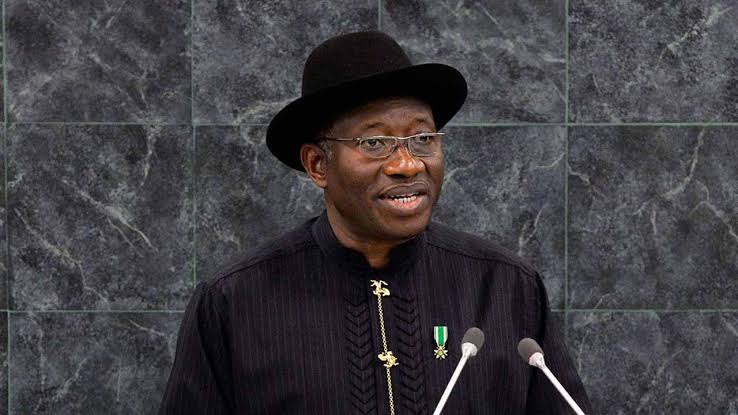
Former President Goodluck Jonathan has called for urgent reforms to Nigeria’s electoral litigation process, urging the National Assembly to review existing legal frameworks to strengthen the credibility and efficiency of election dispute resolution.
Jonathan made the call during a public engagement where he addressed challenges associated with prolonged election petitions and judicial processes in Nigeria.
He noted that the current system often delays justice and creates uncertainty around electoral outcomes.
According to him, the electoral litigation process should be structured to ensure timely resolution of disputes, thereby reinforcing public confidence in democratic institutions.
He emphasised that electoral justice must not only be fair but also prompt, as delays can undermine governance and political stability.
Jonathan stated that prolonged litigation periods place pressure on both the judiciary and the political system.
He warned that extended court battles after elections could distract elected officials from governance responsibilities and create tensions among political stakeholders.
He urged lawmakers in the National Assembly to consider legislative amendments that would streamline procedures, reduce delays, and clarify timelines for handling electoral cases.
The recommendation reflects ongoing concerns about the efficiency of Nigeria’s election dispute resolution mechanisms.
Nigeria’s electoral disputes are primarily handled through election petition tribunals and appellate courts.
These processes often involve multiple stages, including tribunal hearings, appeals, and in some cases, Supreme Court rulings.
While the system is designed to ensure fairness, stakeholders have raised concerns about delays and procedural complexities.
Jonathan highlighted that reforming the electoral litigation process is essential for strengthening democratic governance.
He noted that credible elections extend beyond voting and include effective mechanisms for resolving disputes in a transparent and timely manner.
The former president also stressed the need for institutional collaboration between the legislature, judiciary, and electoral bodies.
He said that aligning legal frameworks with operational realities would improve the overall efficiency of election management.
Observers note that Nigeria has experienced several high-profile election disputes at federal and state levels, with cases sometimes lasting several months after winners have been sworn into office.
These situations have raised questions about the balance between legal due process and governance continuity.
Jonathan’s call aligns with broader discussions on electoral reforms aimed at enhancing transparency, accountability, and public trust.
Experts argue that a more efficient electoral litigation process would reduce political uncertainty and improve the legitimacy of elected officials.
Reforming the system could strengthen public confidence in elections and reduce post-election tensions.
Timely resolution of disputes would allow governments to focus on policy implementation without prolonged legal distractions.
Improved processes may also enhance judicial efficiency by reducing case backlogs and ensuring clearer procedural guidelines for election tribunals.