
Voters across Edo State’s three senatorial districts, 18 local government areas, 192 wards and 4,519 polling units went to the polls on November 12, 2024, to elect a governor to succeed Godwin Obaseki, whose eight‑year tenure was coming to an end.
Outgoing Governor Obaseki was first elected in 2016, in a contest supported by his then‑predecessor, Comrade Adams Oshiomhole of the All Progressives Congress (APC), and later shifted allegiance from the APC to the Peoples Democratic Party (PDP) ahead of his 2020 re‑election.
The 2024 election was conducted amid intense political activity, with candidates from multiple parties contesting the governorship seat.
According to the Independent National Electoral Commission, about 2.249 million registered voters had collected their Permanent Voters Cards ahead of the poll, indicating the scale of voter preparedness for the election.
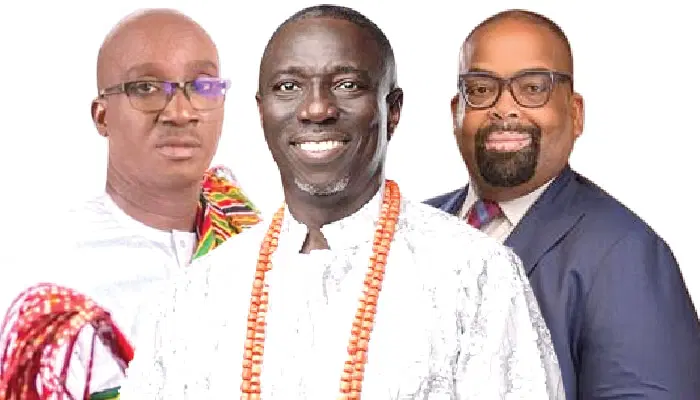
A total of 18 candidates from different political parties contested to succeed Obaseki. The main contenders included Dr. Asue Ighodalo of the Peoples Democratic Party; Senator Monday Okpebhelo of the All-Progressives Congress; and Mr. Olumide Akpata of the Labour Party.
The election was widely described as a three‑horse race among the PDP, APC and Labour Party standard‑bearers.
Okpebhelo and Ighodalo have their political bases in Edo Central, while Akpata, like Obaseki, hails from Edo South, the state’s largest electoral bloc in terms of registered voters.
Edo South accounts for almost 54 percent of the state’s voting strength, making it a key battleground in the contest.
Candidates and their campaign teams focused significant attention on securing a substantial share of votes from the zone due to its electoral weight.
In Edo Central, both the PDP and APC candidates drew support from political figures and party stalwarts in the area.
Okpebhelo was backed by former state APC chairmen and retired military officers, while Ighodalo drew support from senior PDP figures, including former ministers and lawmakers.
Edo North, with its sizeable voter base, also factored into the campaign strategies of the major parties.
The APC candidate was reported to have backing from party leaders and prominent politicians in that zone, while Ighodalo’s support included leaders who had longstanding involvement in state politics.
Several smaller parties fielded candidates in the election, bringing the total number of aspirants to eighteen.
Parties represented included Accord, Action Alliance, African Action Congress, African Democratic Congress, Allied Peoples Movement, All Peoples Party, Boot Party, New Nigerian Peoples Party, Peoples Redemption Party, Social Democratic Party, Young Peoples Party and Zenith Labour Party, among others.