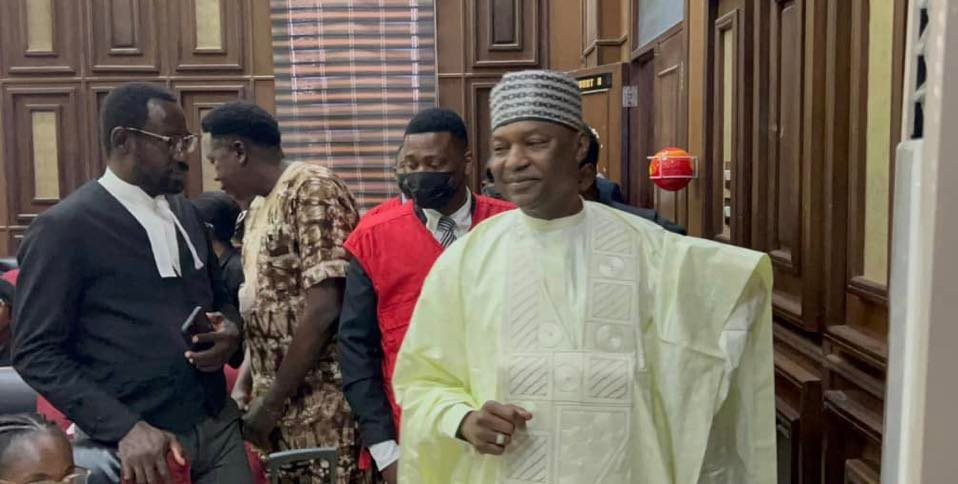



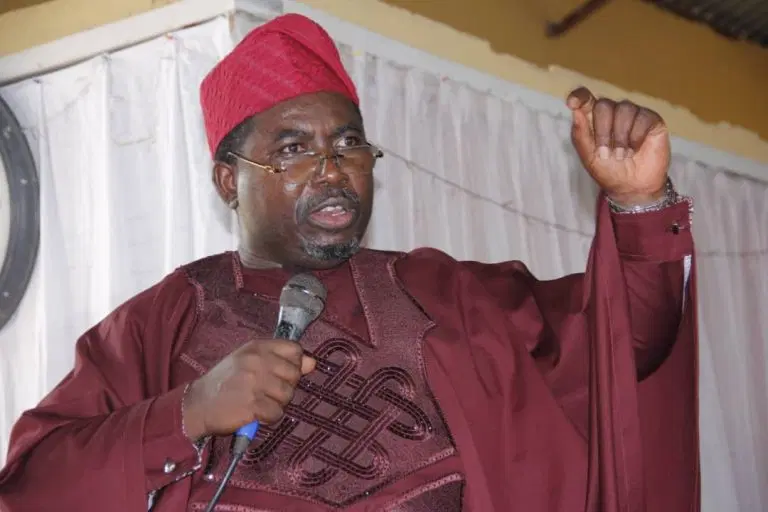
The Delta South senatorial battle is gaining momentum as political actors begin repositioning ahead of the 2027 general elections, with Senator Joel-Onowakpo Thomas and Michael Diden emerging once again as key contenders for the seat.
Both politicians contested the 2023 senatorial election on different platforms, with Joel-Onowakpo representing the All Progressives Congress and Diden contesting under the Peoples Democratic Party.
The election was closely fought, with Joel-Onowakpo securing victory, a result later affirmed by the courts.
The renewed Delta South senatorial battle is unfolding under a different political configuration.
Unlike the 2023 contest, both Joel-Onowakpo and Diden are now aligned within the All Progressives Congress, setting the stage for a competitive primary election rather than a general election contest.
The Delta South Senatorial District is a multi-ethnic constituency comprising Ijaw, Itsekiri, and Isoko groups, with eight local government areas including Warri South, Warri North, Warri South-West, Isoko North, Isoko South, Burutu, Bomadi, and Patani.
In addition to Joel-Onowakpo and Diden, other aspirants have indicated interest in the race.
Among them is Chief Malik Itiako Ikpokpo, a former chairman of Isoko South Local Government Area and a past leader within the Association of Local Governments of Nigeria.
His entry adds another dimension to the evolving Delta South senatorial battle within the APC.
Joel-Onowakpo, the incumbent senator, currently chairs the Senate Committee on Local Content and has previously served as Executive Chairman of the Delta State Board of Internal Revenue.
His supporters argue that his performance in office strengthens his case for re-election and positions him as a strong contender in the forthcoming primary.
Michael Diden, popularly known as Ejele, brings significant political experience, having served as chairman of Warri North Local Government Area and as a member of the Delta State House of Assembly.
He also held a leadership role in the Delta State Oil Producing Areas Development Commission.
His camp maintains confidence in his political strength and grassroots support.
The evolving Delta South senatorial battle has also revived discussions around equity and zoning among the district’s ethnic groups.
Some stakeholders argue that Itsekiri should produce the next senator, citing historical representation patterns.
Others contend that the Isoko ethnic group remains underrepresented and should retain the seat for continuity.
Historical representation shows that the district has been represented by different ethnic groups over time, including Ijaw and Isoko leaders.
Analysts note that these considerations are likely to influence political alignments and voter sentiment as the primary approaches.
The All Progressives Congress is expected to determine its candidate through either direct primaries or a consensus arrangement.
The chosen method could significantly shape the outcome of the contest, as aspirants intensify consultations and mobilization efforts.
The contest reflects broader political dynamics within Delta State, where internal party competition is becoming a defining feature of electoral positioning.
The outcome of the APC primary will determine the party’s strength in the district ahead of the general elections.
The renewed rivalry also highlights the importance of internal democracy and consensus-building within political parties.
Stakeholders expect the process to influence not only representation but also party cohesion.