




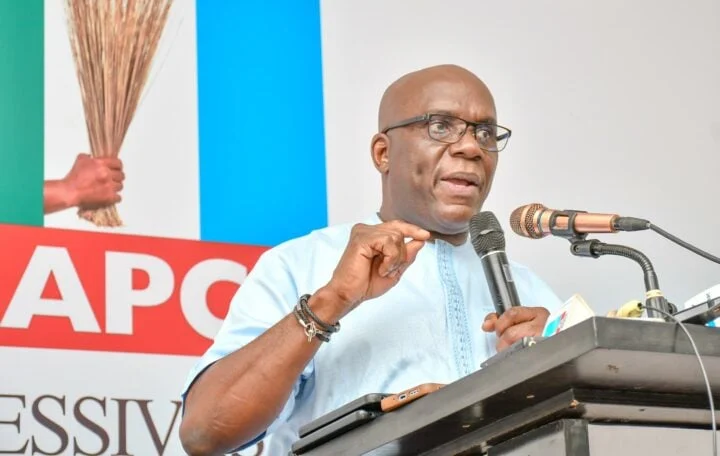
The All-Progressives Congress (APC) has denied claims that President Bola Tinubu or the party orchestrated the defection of Governor Abba Kabir Yusuf of Kano State and other governors from opposition parties, saying the moves were voluntary decisions by the respective leaders.
APC National Publicity Secretary Felix Morka stated this during an appearance on Channels Television’s Politics Today on January 26, 2026.
Morka described assertions that the ruling party used inducements to attract sitting governors as unfounded. “Nobody is baiting anyone. These eminent leaders in our country who are joining our party do so of their own volition. No one is baiting anyone,” he said.
The APC spokesman said the defections reflect confidence in the Tinubu administration’s policy direction and leadership rather than any external enticement.
He emphasised that governors opting to join the APC seek to align with what he described as the party’s vision for governance and national development.
Discussing leadership implications at the state level, Morka said governors in APC‑controlled states are considered party leaders, while also acknowledging the role of other party stakeholders.
“The governor may be the political head, but there are other critical and eminent leaders in all of our states…,” he said, underscoring the collaborative model of governance the party promotes.
The latest move by Governor Yusuf followed his resignation from the New Nigeria Peoples Party (NNPP), effective January 23, 2026, after citing internal crises and a desire to safeguard the interests of his constituents.
His expected formal defection to the APC on January 26 came with the support of several legislators, including 22 members of the Kano State House of Assembly, eight members of the House of Representatives, and all 44 local government chairmen in the state.
During the unveiling ceremony in Kano, former APC National Chairman Dr Abdullahi Ganduje, who described Yusuf’s return as a homecoming, noted that the governor had been part of the APC’s formative years before leaving for other political platforms.
The defection trend has prompted commentary from various quarters. Some opposition figures have labelled the movement of governors to the APC as detrimental to Nigeria’s multi‑party democracy and reflective of political convenience rather than ideological alignment.
Others within APC circles maintain that aligning with the ruling party could enhance access to federal support and interventions for states.
Analysts note that while the APC maintains that departures to its ranks are voluntary, opposition critics continue to question the broader impact on democratic balance and political pluralism ahead of the 2027 general elections.
As political realignments continue, debates over motivations and implications are expected to shape discourse on party loyalty, governance incentives, and electoral dynamics in the run‑up to the next national polls.