



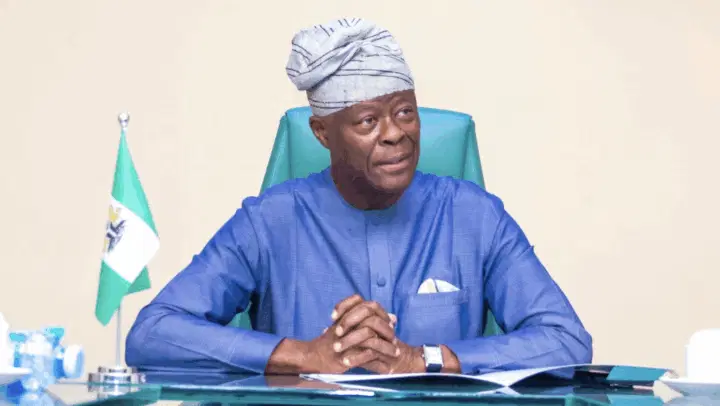
Nigeria’s Finance Minister, Olawale Edun, has called for urgent measures to address Africa illicit flows, which cost the continent an estimated $88 billion annually.
Speaking at the Fifth Sub‑Committee on Tax and Illicit Financial Flows of the African Union, Edun described these outflows as a significant barrier to economic growth and public development.
The event, held in Abuja, gathered officials from African countries to discuss strategies for improving domestic financing and reducing capital flight.
Edun emphasized that such financial losses undermine investment in health, education, and infrastructure.
“Illicit financial flows alone are estimated to cost Africa more than $88 billion each year,” he said.
“This represents capital that could be used to fund development projects and enhance citizens’ welfare.”
Edun noted that Africa often spends more on debt servicing than it receives in aid and investment.
He stressed that the continent’s population of 1.4 billion and its rich natural resources should provide stronger economic outcomes if Africa illicit flows are curtailed.
The minister highlighted key areas for reform under the African Union’s Agenda 2063.
These include improving tax administration, maximising natural resource revenues, enhancing domestic savings, and digitizing financial governance to reduce illicit capital flight.
Edun also referenced Nigeria’s domestic reforms, such as the National Single Window project, which simplifies trade processes, increases revenue collection, and improves transparency in import and export transactions.
Dr Zacch Adedeji, Executive Chairman of the Nigerian Revenue Service, supported Edun’s remarks, describing Africa illicit flows as one of the continent’s most serious economic threats.
He cited illegal transfers, trade mispricing, tax evasion, and opaque corporate structures as major contributors to these losses.
Adedeji emphasized that coordinated action across African countries is essential.
“Continental cooperation is indispensable to detect, prevent, and recover illicit flows,” he said.
Experts note that tackling Africa illicit flows can significantly strengthen domestic resource mobilization, fiscal sustainability, and economic independence.
Reducing these outflows enhances the capacity of governments to finance essential services without overreliance on foreign aid or loans.
International data show that illicit flows persist due to corruption, tax evasion, and money laundering.
These drains reduce government revenues and hinder investment in infrastructure and social services.
The sub‑committee concluded with a call for urgent reforms, including stronger tax systems, improved corporate transparency, and digital financial governance.
Officials agreed that addressing Africa illicit flows is crucial for shared prosperity and sustainable development.