

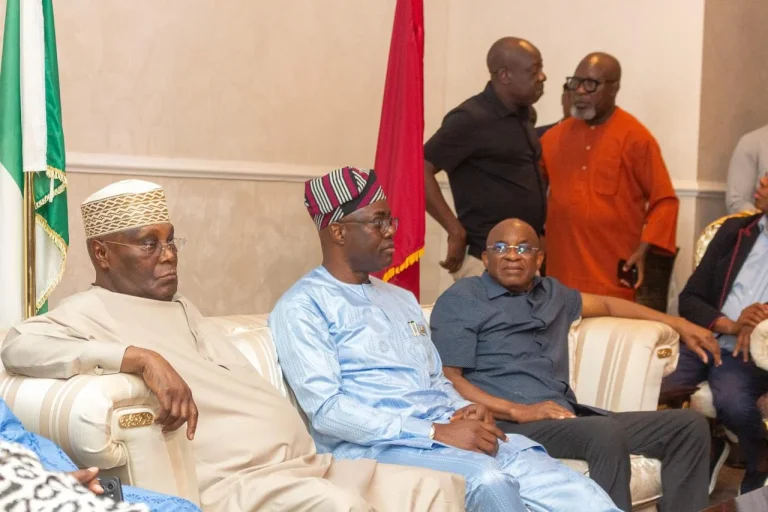
The absentee governance criticism intensified as Atiku Abubakar faulted Bola Ahmed Tinubu over what his camp described as a pattern of limited engagement during recent official activities in Plateau and Lagos states.
In a statement issued by his media aide, Phrank Shaibu, the former vice president’s camp described the president’s conduct as a “disturbing pattern of absentee leadership,” raising concerns about responsiveness at a time of national security challenges.
The statement focused on the president’s recent visit to Jos following a deadly attack. According to the statement, the visit was “shockingly brief and perfunctory,” noting that the president spent about 10 minutes at the airport before departing.
The Atiku camp argued that the short duration of the visit reflected a lack of engagement with the gravity of the situation.
It stated that the justification given for the brief stop, which was linked to onward engagements in Lagos, had been undermined by subsequent developments.
Further reinforcing the absentee governance claim, the statement pointed to the president’s working visit to Lagos, where he was said to have had minimal visible participation in scheduled activities.
According to the statement, the president remained largely within his private residence during the visit.
The statement cited specific events that the president did not personally attend, including the commissioning of the Opebi–Mende–Ojota Link Bridge and the inauguration of a Multi-Agency Complex.
These engagements were instead handled by the Senate President, who represented the administration.
According to the Atiku camp, the pattern of absence from key national functions contributed to broader concerns about leadership at a time when the country faces security challenges and increasing international attention.
The statement referenced recent precautionary actions taken by the United States regarding its personnel in Nigeria.
The statement added that leadership requires presence and accountability, stressing that national challenges demand active engagement from the highest office.
It argued that limited visibility at critical moments could affect public confidence in governance.
The absentee governance narrative was further framed within the context of rising insecurity and ongoing national concerns.
The Atiku camp maintained that leadership must demonstrate responsiveness, especially following incidents of violence and public anxiety.
The statement concluded with a call for a reassessment of leadership approach, urging the president to engage more directly with national issues and responsibilities.
It emphasised that effective governance requires consistent presence, responsiveness, and commitment to public duty.