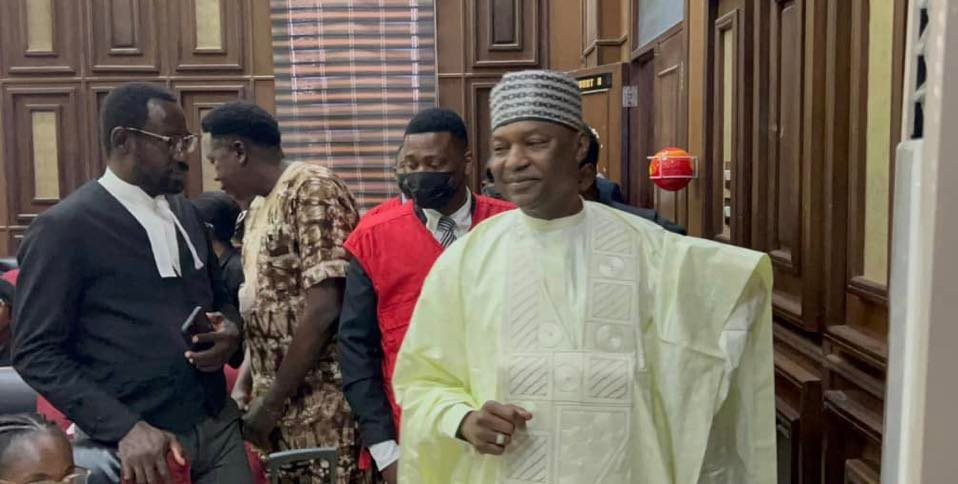




Human rights activist and lawyer Deji Adeyanju has criticised opposition parties for what he described as “hypocritical” attacks on the Economic and Financial Crimes Commission (EFCC) over its handling of the case involving former Attorney-General of the Federation and Minister of Justice,
Abubakar Malami (SAN), urging them instead to champion accountability and the rule of law. Adeyanju made the remarks in a statement to journalists on Monday, January 12, 2026.
Adeyanju expressed disappointment that some opposition figures appeared to undermine anti-graft efforts by questioning the EFCC’s actions rather than calling for a thorough and transparent investigation into the allegations against Malami.
He said public office holders should be held accountable regardless of political affiliation.
“I am disturbed by what I see as hypocrisy in the reaction of some opposition figures to the arrest of former Attorney-General of the Federation and Minister of Justice, Abubakar Malami, SAN,” Adeyanju said.
“You cannot claim to desire a better Nigeria while appearing to defend individuals facing serious allegations of corruption.”
He argued that opposition parties should demand accountability and the rule of law rather than seek to discredit the EFCC’s actions. Adeyanju stressed that a consistent commitment to upholding justice should not vary based on partisan interests or the political standing of the individuals involved.
“What the opposition should be demanding is a transparent and comprehensive investigation, not public attacks on the EFCC or attempts to discredit its actions,” he said, calling on political actors to refrain from rhetoric that could weaken public confidence in Nigeria’s anti-corruption institutions.
Adeyanju also emphasised the importance of encouraging the EFCC to carry out its mandate professionally and without interference, noting that no one should be shielded from law enforcement scrutiny due to political considerations.
The activist’s comments come amid ongoing debate over the EFCC’s prosecution of Malami, who was arraigned in December 2025 on a 16-count charge related to alleged financial crimes, including money laundering. Critics — particularly from the African Democratic Congress (ADC) — have accused the anti-graft agency of politicising the case, claiming bias and selective enforcement of the law.
Adeyanju concluded by urging political actors to support transparent investigations and equal application of the law as essential elements of Nigeria’s fight against corruption and as critical to building public trust in governance institutions.
Next steps: The Malami case continues in court, with legal and political observers watching closely for developments that may influence perceptions of anti-corruption enforcement and institutional independence in Nigeria.