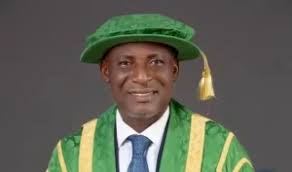



The Chairman of the Economic and Financial Crimes Commission (EFCC), Mr. Ola Olukoyede, has dismissed accusations that the anti-graft agency is engaged in a politically motivated “witch-hunt” against former Attorney-General of the Federation and Minister of Justice, Abubakar Malami (SAN), asserting that the investigation is professional and devoid of personal or partisan considerations.
Olukoyede spoke during an exclusive interview on Channels Television’s Sunday Politics on Sunday, January 11, 2026.
Olukoyede said the case involving Malami has been under scrutiny for nearly two and a half years, explaining that it began before he assumed office as EFCC chairman.
He said his role was to ensure the investigation was “carried out in a very professional and thorough manner,” rejecting claims that the probe is driven by political motives.
“There is nothing personal in this matter,” he said. “If Nigeria is to move forward, all of us must agree that this fight must be fought without being partisan.”
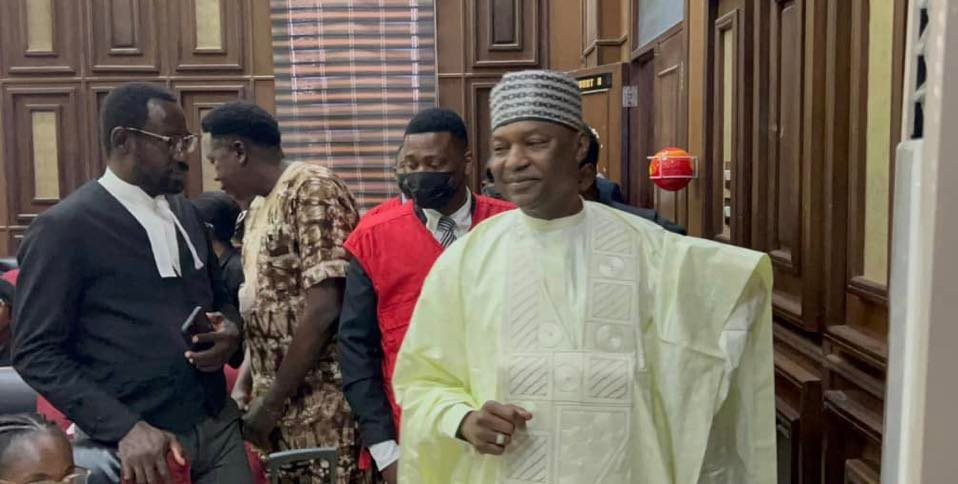
The EFCC recently arraigned Malami, his wife and son before the Federal High Court in Abuja on a 16-count charge bordering on alleged money laundering, according to court records.
On January 7, 2026, Justice Emeka Nwite granted bail in the sum of ₦500 million with two sureties each, who must own landed property in designated high-brow Abuja districts and require the deposit of the defendants’ travel documents with the court.
Critics, including the African Democratic Congress (ADC) in Kebbi State, accused the EFCC of selective enforcement of the law and political victimisation in the Malami case, alleging bias and partisan targeting of opposition figures.
Olukoyede rejected these assertions as unfounded, saying the EFCC’s mandate compels it to enforce the law fairly and without favour.
Speaking to the broader context of high-profile corruption probes, Olukoyede said that lengthy investigations are standard, particularly where complex financial crimes and extensive documentation are involved.
He emphasised that ensuring a “watertight case” before arraignment is necessary to uphold justice and maintain prosecutorial integrity.
Observers have noted public discourse around the case has included broader critiques of anti-corruption agencies’ roles and perceptions of impartiality, with some voices urging the EFCC to safeguard its independence and reinforce confidence in its processes.
At the same time, civil society commentators have underscored that statutory bodies like the EFCC are empowered to investigate alleged wrongdoing by any Nigerian irrespective of political affiliation, stressing adherence to due process and the rule of law.
Malami has publicly challenged aspects of the EFCC’s case, including allegations of operating multiple bank accounts with questionable funds, which his media team has described as baseless and denied operating beyond known accounts.
The EFCC chairman’s remarks come amid heightened attention to anti-graft enforcement in Nigeria, with legal observers and public stakeholders watching developments closely as the judicial process unfolds.
Future progress in the matter is expected to be shaped by court proceedings and continued adherence to procedural fairness.