


The University of Nigeria, Nsukka, UNN, has intensified efforts to prepare its academic community for the growing role of Artificial Intelligence in higher education.
The Faculty of the Social Sciences recently trained more than 100 academic and senior staff members and postgraduate students in practical AI applications for research, teaching, supervision and academic administration.
The two-day programme, held from August 26 to 27, 2026, at the Faculty of the Social Sciences Lecture Hall, was organised in partnership with the Design Thinking Center, DTC, and The Beaconsmith Collective.
The training, tagged “Artificial Intelligence for Academia Productivity,” focused on helping participants use AI tools more effectively while maintaining academic standards and human oversight.
Participants were introduced to applications of AI in literature discovery, research development, academic writing, teaching and assessment, postgraduate supervision and administrative responsibilities.
Rather than encouraging participants to accept AI-generated responses at face value, the programme placed considerable emphasis on verification and critical evaluation.
Participants were taught to question, check and improve AI outputs while paying attention to privacy, academic integrity and responsible technology use.
The workshop concluded with a 30-day action plan designed to help participants incorporate the lessons into their regular academic activities.
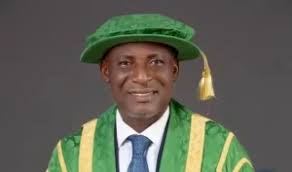
The Dean of the Faculty of the Social Sciences, Prof. Chukwuedozie Ajaero, said the training would help academics respond to the changing demands of contemporary scholarship.
“The question is no longer whether academics will encounter AI, but how well we are prepared to use it,” Ajaero said.
He explained that the programme was deliberately practical, giving participants an opportunity to explore how AI could improve everyday academic work without compromising verification, ethics or human responsibility.
According to him, the train-the-trainers model would also allow the knowledge acquired to spread beyond those who participated directly.
Staff trained through the programme are expected to share relevant knowledge and practices with colleagues and students across the faculty.
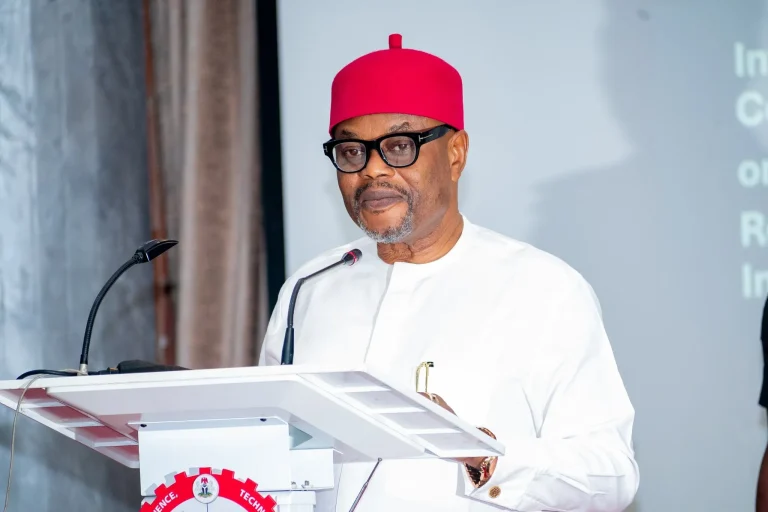
The initiative was convened through the Design Thinking Center, which facilitated the partnership and brought in Engr. Nzube Chikwado Ndiokwelu, Founder of The Beaconsmith Collective, as lead trainer.
The Managing Partner of the Design Thinking Center, Echeji Chibuike, also contributed to the programme.
Ndiokwelu led practical sessions covering AI applications across research, teaching, postgraduate supervision and academic administration.
He stressed that responsible adoption should remain central to the use of emerging technology in academic environments.
“For us at The Beaconsmith Collective, the value of AI is not simply in having access to new tools. What matters is whether those tools can help people do important work better,” he said.
He added that in universities, AI should strengthen research, teaching, supervision and institutional work while leaving evidence, context and academic judgment with the people responsible for the work.
Ndiokwelu further noted that universities had an important role in shaping how AI and other emerging technologies were understood and deployed as their influence expands across education and professional life.
The Beaconsmith Collective, based in Enugu, focuses on artificial intelligence, emerging technologies, applied research, digital governance, creative technology and ecosystem development.
The faculty’s engagement also extended beyond the workshop.
Ajaero led members of the faculty on a visit to Block Hive, a technology community operating around the university environment.
The delegation toured the technology hub and interacted with its founder, Ezemmuo Kevin Chibuoyim.
The visit exposed faculty members to practitioners working within the local technology ecosystem and created an avenue for discussions around possible collaboration.
Areas of potential engagement include research, skills development and practical problem-solving.
The combination of the AI workshop and technology-community engagement reflects the faculty’s broader effort to connect academic work with emerging technologies and practical innovation.
For the university community, the initiative represents an attempt to move beyond discussions about AI towards building the skills required to use the technology productively, critically and responsibly.