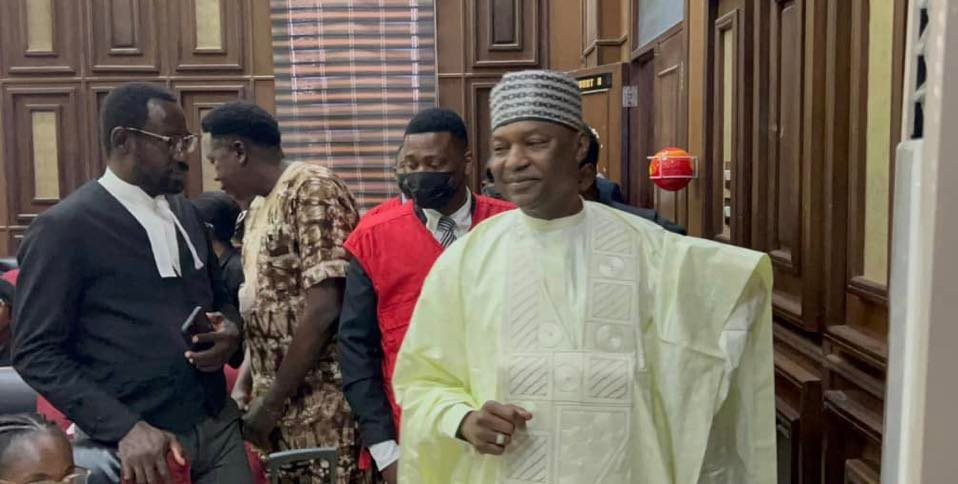





Former Vice President and African Democratic Congress (ADC) presidential candidate, Atiku Abubakar, has criticised the bail conditions imposed on former Kaduna State Governor Nasir El-Rufai, describing them as excessively difficult to meet and warning that such measures could weaken constitutional protections and public confidence in the justice system.
The concerns followed the decision of a Federal High Court to decline a request to review the bail conditions granted to El-Rufai. Reacting through his Senior Special Assistant on Public Communication, Phrank Shaibu, Atiku argued that the development raises broader questions about the administration of justice and the protection of civil liberties in Nigeria. According to him, while courts possess the authority to determine bail terms, such powers must be exercised fairly and reasonably.
Atiku maintained that bail exists to uphold the constitutional principle that every accused person remains innocent until proven guilty. He argued that conditions that are excessive or nearly impossible to satisfy effectively transform bail into a tool for continued detention rather than a safeguard of personal liberty.
“The law is settled that an accused person remains innocent until proven guilty. Bail exists to preserve that constitutional protection. It was never designed to become a sophisticated instrument for punishment before conviction,” he stated.
The former vice president specifically questioned requirements reportedly demanding that a defendant provide a serving Grade Level 17 federal civil servant who owns verifiable property in Abuja’s Maitama or Asokoro districts, alongside other conditions. According to him, such requirements place release beyond the reach of many citizens.
Speaking further, Atiku said the issue extends beyond the case of El-Rufai and touches on the broader health of Nigeria’s democracy. He warned that if legal processes are perceived as inaccessible or unfair, public trust in democratic institutions could suffer.
“This is not merely about one individual. It is about the principles that underpin a democratic society governed by the rule of law. Today it is El-Rufai. Tomorrow it could be any citizen whose liberty depends not on the law but on whether he can satisfy conditions that few Nigerians can ever meet,” he said.
The ADC leader also expressed concern about what he described as a growing trend in which opposition figures and government critics become entangled in legal and administrative disputes.
Atiku urged the judiciary to ensure that justice remains fair, impartial and accessible to all citizens. He stressed that bail conditions should be designed solely to guarantee a defendant’s appearance in court rather than create barriers that result in prolonged detention.
“Bail conditions should secure attendance in court, not guarantee continued incarceration,” he said.
He further argued that granting bail while imposing nearly unattainable conditions amounts to a constructive denial of that right and undermines the spirit of constitutional protections.
Reaffirming his position, Atiku said the questions surrounding the case are not about determining guilt or innocence but about safeguarding fundamental rights guaranteed by the Constitution. He maintained that the principles of liberty, fair hearing and the presumption of innocence must remain central to Nigeria’s democratic system, warning that justice must remain independent of political influence to preserve public confidence in the rule of law.